

 Русский
 Bahasa Indonesia
 فارسی
فارسی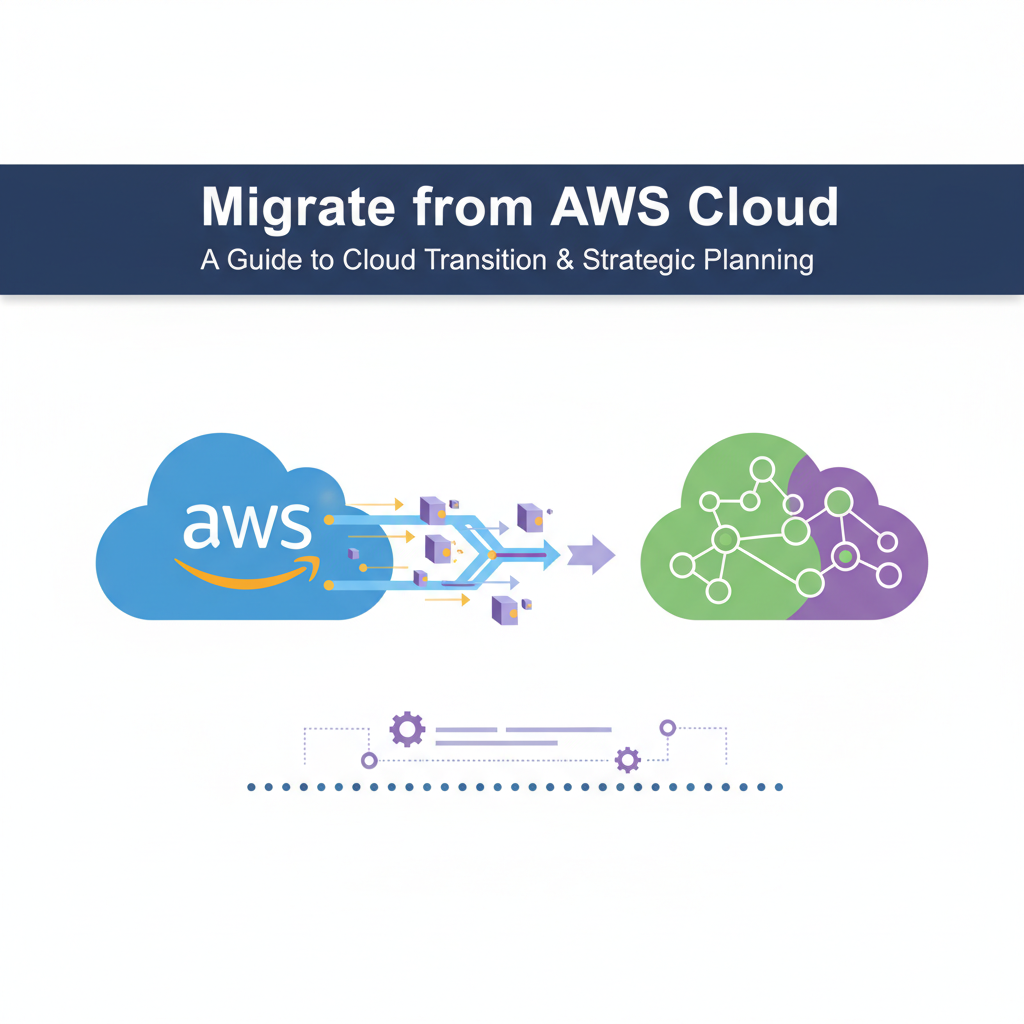
Migrating from Amazon Web Services (AWS) can be a complex but necessary undertaking for various reasons, including cost optimization, vendor diversification, or specific regional requirements. This guide explores the critical steps and considerations involved in successfully transitioning your infrastructure and applications away from AWS, ensuring a smooth and efficient migration process. We will cover planning, execution, and post-migration strategies.
Understanding the Motivations for AWS Migration
In the journey of cloud adoption, organizations often find themselves re-evaluating their foundational choices, chief among them being their primary cloud provider. While AWS has undeniably been a pioneer and remains a dominant force, a strategic decision to migrate *from* AWS, rather than *to* it, is becoming an increasingly common and well-justified undertaking. This chapter delves into the core motivations driving such an significant organizational shift, exploring the multifaceted reasons why a company might choose to decouple from its AWS environment and transition to an alternative cloud or a hybrid model.
One of the most frequently cited and compelling reasons for migrating from AWS is ***cost optimization and controlling cloud spend***. Despite AWS’s vast array of services and pricing models, for some organizations, the cumulative expenditure can become untenable or disproportionate to the value received. This isn’t necessarily a reflection of AWS being inherently more expensive across the board, but rather a confluence of factors. For instance, an organization might have initially adopted AWS with a “lift and shift” approach, porting existing on-premise applications without significant refactoring. This can lead to underutilization of resources, a reliance on more expensive managed services when self-managed alternatives might suffice, or accruing costs from services provisioned but not fully optimized (e.g., forgotten EBS volumes, idle EC2 instances, excessive data transfer charges). A concrete example is a medium-sized e-commerce company that, after several years, noticed its monthly AWS bill steadily climbing, largely due to escalating data transfer out (egress) charges for syncing data with partners and delivering content globally via CloudFront. Upon analysis, they discovered that a competitor’s cloud provider offered significantly lower egress costs, making a migration from AWS a financially attractive proposition for their specific workload profile. Similarly, a startup heavily reliant on serverless functions might find that another provider offers more generous free tiers or more competitive pricing for their specific execution patterns, leading to a substantial reduction in operational expenses. The initial appeal of AWS’s scalability and breadth can, without diligent cost management and architectural foresight, transform into a significant financial burden that prompts a re-evaluation of provider choice.
Another critical driver is the ***desire to avoid vendor lock-in***. While AWS champions an open ecosystem and offers services that are often standardized (like Kubernetes with EKS), a deep reliance on proprietary AWS services can create a strong dependency. This dependency can manifest in several ways: specialized APIs, unique managed services (e.g., DynamoDB, Lambda, Kinesis), or specific tooling that ties an application closely to the AWS environment. While these services offer significant benefits in terms of development speed and operational overhead, they can also make it challenging and costly to move to another provider. An organization heavily invested in multiple proprietary AWS services might fear that a future change in AWS pricing, service availability, or technical direction could negatively impact their business with limited recourse. For example, a large financial institution had built a critical data analytics platform largely on AWS Lambda, AWS Glue, and Amazon Redshift. While performant, the inherent coupling to these AWS-specific services meant that exploring other cloud providers for similar capabilities involved significant re-architecture and code refactoring. Their motivation to migrate stemmed from a strategic imperative to maintain greater optionality and negotiating power with cloud providers, preventing any single vendor from dictating terms. They began a phased migration, focusing on containerizing applications with Docker and Kubernetes, and adopting open-source databases, thereby abstracting away underlying infrastructure dependencies and preparing for a potential move to a different cloud or hybrid environment.
***Compliance requirements*** can also play a pivotal role in prompting a migration from AWS. While AWS offers a comprehensive suite of compliance certifications and features (e.g., HIPAA, GDPR, PCI DSS, FedRAMP), certain industry-specific or national regulations might be better or more easily met by alternative providers. This can be particularly true for organizations operating in highly regulated sectors or those with strong data residency requirements. For instance, a European healthcare provider, bound by strict GDPR guidelines and national data sovereignty laws, initially hosted patient data on AWS. Despite AWS’s European regions, the provider encountered increasing scrutiny regarding potential data flows outside the EU and the intricacies of subcontractor agreements. They found that a local European cloud provider, which specialized in healthcare compliance and offered a clearer, more localized legal framework, could provide a more straightforward path to meeting their regulatory obligations. This specific local provider offered dedicated national data centers and robust data governance policies that aligned more seamlessly with their country’s regulations, making a compelling case for migration despite the technical effort involved.
***Performance considerations for specific workloads*** can also drive a switch. While AWS is renowned for its performance and global reach, certain niche workloads or intense computational requirements might find a better fit elsewhere. This is not a universal indictment of AWS performance, but rather an acknowledgment that different providers excel in different areas. For example, a high-frequency trading firm, operating with extremely low-latency requirements for its algorithmic trading platforms, initially used AWS. However, after extensive benchmarking, they discovered that a specialized cloud provider, offering bare-metal instances with direct network access (bypassing hypervisor overhead) and strategically located data centers closer to financial exchange points, could deliver microsecond-level performance gains critical to their competitive edge. Similarly, a visual effects studio heavily reliant on GPU-intensive rendering farms found that another cloud provider offered more competitive pricing and a greater variety of high-end GPU instance types, tailoring their infrastructure to their specific compute-bound workflows more effectively than their current AWS setup.
Finally, the pursuit of ***hybrid or multi-cloud strategies*** often necessitates a decoupling from a sole AWS reliance. Organizations may adopt a multi-cloud approach to increase resilience, leverage best-of-breed services from different providers, or maintain geopolitical flexibility. If a company has grown organically within AWS, but now strategically decides to diversify its cloud footprint (e.g., using GCP for AI/ML capabilities and Azure for its enterprise identity integration), a migration of some workloads *from* AWS to these new environments becomes an integral part of this broader strategy. For example, a global enterprise acquired several smaller companies, each with its own cloud provider (AWS, Azure, GCP). To standardize operations and foster resilience, they decided to implement a multi-cloud strategy. This involved not just adding new cloud providers but also strategically moving some existing applications from their legacy AWS environment to Azure or GCP where they could benefit from specific integrations or cost models that aligned better with their consolidated enterprise architecture, creating a truly heterogeneous and resilient cloud landscape.
In essence, while AWS offers an unparalleled ecosystem, the decision to migrate from it is rarely taken lightly. It stems from a confluence of strategic, financial, and technical factors, all aimed at optimizing an organization’s cloud posture for its unique business objectives and evolving market dynamics. The following chapters will delve into the practical steps and considerations involved in executing such a complex but often rewarding transition.
Strategic Planning for a Successful AWS Exit
Understanding the Motivations for AWS Migration
Migrating from AWS, a platform renowned for its breadth of services and market dominance, might seem counterintuitive at first glance. However, for a variety of strategic and operational reasons, many organizations find themselves evaluating such a move. This chapter delves into the primary motivations driving enterprises to consider decoupling from AWS and transitioning to alternative cloud providers or hybrid environments. These motivations are often multifaceted, stemming from a blend of financial, technical, and strategic imperatives.
One of the most pervasive drivers for an AWS migration is cost optimization and controlling cloud spend. While AWS offers a vast array of services and pricing models that can be cost-effective for certain workloads, the complexity of its billing, combined with the ease of provisioning resources, can inadvertently lead to spiraling costs. Organizations often accrue “cloud debt” through underutilized resources, unoptimized configurations, or unforeseen data transfer charges. For instance, a medium-sized e-commerce company might initially leverage AWS EC2 instances for their web application and RDS for their databases, enjoying rapid scaling and robust infrastructure. However, as their architecture evolves, they might discover that their chosen instance types are overprovisioned for steady-state workloads, or that ingress/egress data transfer costs, particularly for cross-region replication or extensive CDN usage, become significantly higher than anticipated. Furthermore, the specialized pricing models for services like Lambda (based on invocations and duration) or S3 (based on storage, requests, and data transfer) can lead to unexpected expenses if not meticulously monitored and optimized. A migration often becomes a strategic lever to identify and rectify these inefficiencies, potentially by moving to a provider with simpler, more predictable pricing structures, or by repatriating specific workloads to on-premises infrastructure where capital expenditure can be more tightly controlled than operational expenditure.
Another significant motivation is the desire to avoid vendor lock-in. While AWS’s extensive ecosystem offers powerful integrations and specialized services, relying too heavily on proprietary AWS technologies can create a strong dependency that makes transitioning to another platform exceptionally challenging. This “stickiness” can limit an organization’s negotiating power, stifle innovation by restricting choices of best-of-breed services from other providers, and pose a significant risk if AWS’s service offerings or pricing models no longer align with the organization’s strategic direction. Consider a SaaS provider heavily utilizing AWS services like DynamoDB for their NoSQL database needs, Step Functions for orchestrating complex workflows, or Kinesis for real-time data streaming. While these services provide immense value, they are unique to AWS. Migrating such an application to, say, Azure or Google Cloud, would necessitate not just a lift-and-shift of virtual machines, but a complete re-architecting of core components to leverage equivalent, yet fundamentally different, services on the new platform. This re-architecture is a non-trivial undertaking, requiring significant development effort, testing, and potential disruption. Organizations might proactively migrate to a more open-source friendly cloud, or to a platform that offers greater interoperability, to mitigate this future risk and maintain strategic flexibility.
Compliance requirements can also be a driving force for AWS migration. While AWS is compliant with a vast array of global and industry-specific certifications (e.g., HIPAA, GDPR, PCI DSS, FedRAMP), specific regulatory mandates, particularly in highly regulated industries like finance, healthcare, or government, might necessitate using local data centers or providers that offer specific geopolitical guarantees or data sovereignty controls. For example, a European financial institution might face strict regulations requiring customer data to reside exclusively within EU borders, and while AWS has extensive EU regions, a local cloud provider might offer more explicit assurances or specialized compliance certifications tailored to intricate national banking laws. Similarly, a government agency might find that stringent national security protocols or data classification requirements are more easily met by a domestic cloud provider that has undergone specific governmental security clearances. In such cases, the perceived or actual compliance overhead of maintaining strict adherence within AWS’s global footprint can outweigh the benefits, prompting a move to a cloud platform with a more localized or specialized compliance profile.
Performance considerations for specific workloads can also precipitate a move from AWS. While AWS offers global low-latency infrastructure, certain highly specialized or latency-sensitive applications might find better performance characteristics on alternative platforms. This is often true for workloads requiring extremely high IOPS (Input/Output Operations Per Second) or dedicated network bandwidth that might be more readily available or cost-effective on a competitor’s platform, or even in a carefully engineered on-premises environment. Take, for instance, a high-frequency trading firm or a real-time gaming company. While AWS offers powerful instances, the nuanced network topology and proximity to specific exchanges or player bases might lead them to explore specialized Bare Metal as a Service (BMaaS) offerings or hyper-optimized cloud regions from other providers that can guarantee even lower latency and higher throughput for their critical operations. Similarly, workloads with bursty, unpredictable demands might find that different cloud providers offer more granular or cost-effective autoscaling solutions that better match their specific performance profiles without significant overprovisioning.
Finally, the pursuit of hybrid or multi-cloud strategies is a significant motivation. Organizations increasingly seek to diversify their cloud footprint to enhance resilience, optimize costs, and foster innovation. A hybrid strategy often involves running some workloads on-premises while leveraging public cloud for others, whereas a multi-cloud approach involves utilizing services from two or more public cloud providers. While AWS offers robust hybrid capabilities (e.g., AWS Outposts, Direct Connect), an organization might decide to migrate some workloads from AWS to another hyperscaler (e.g., Azure or Google Cloud) to achieve true vendor diversification. For example, a large enterprise might run its core SAP ERP system on-premises due to stringent security and existing investments, while deploying its customer-facing microservices on AWS for agility and scalability. However, for its data analytics and AI/ML initiatives, they might choose Google Cloud due to its perceived strength in those areas and its leading-edge open-source tooling. In this scenario, a “migration from AWS” isn’t a wholesale abandonment, but rather a strategic reallocation of specific workloads to a different cloud provider as part of a broader multi-cloud orchestration strategy. This allows the organization to leverage the unique strengths of each platform, mitigate single-vendor risk, and optimize resource allocation across a heterogeneous IT landscape.
Executing the Migration Data and Applications
Understanding the Motivations for AWS Migration
While AWS has long been a dominant force in cloud computing, organizations increasingly find themselves contemplating a migration away from its ecosystem. This decision is rarely made lightly, often stemming from a confluence of strategic, operational, and financial considerations. Decoupling from AWS and transitioning to another cloud provider or on-premises infrastructure is a complex undertaking, and a clear understanding of the underlying motivations is paramount for a successful migration strategy. Without a firm grasp of “why,” the “how” becomes significantly more challenging and prone to missteps.
One of the most frequently cited reasons for migrating from AWS is cost optimization and controlling cloud spend. While AWS offers a vast array of services and often attractive introductory pricing, costs can rapidly escalate, particularly for organizations with unpredictable workloads, complex architectures, or a lack of granular cost management practices. The pay-as-you-go model, while flexible, can create an illusion of low cost until bills arrive. Organizations might find that the egress data transfer fees, which AWS charges for data leaving its network, become prohibitively expensive, especially for applications with high data egress requirements or those adopting a multi-cloud strategy. Furthermore, the specialized and proprietary nature of some AWS services can make it difficult to leverage competitive pricing from other providers for similar functionalities. For instance, a medium-sized e-commerce company initially found AWS appealing for its scalability during peak sales events. However, as their data volume grew, their monthly storage costs for S3, coupled with increasing data transfer fees for analytics and customer-facing CDN distribution, began to significantly impact their profitability. They discovered that an alternative provider offered more competitive rates for equivalent object storage and CDN services, prompting them to explore a partial migration to reduce these escalating operational expenses.
Another powerful driver is the desire to avoid vendor lock-in. While AWS provides a comprehensive suite of services, many of these are proprietary, making it difficult to lift and shift applications and data to another cloud provider without significant refactoring or re-platforming. This creates a dependency that can limit an organization’s negotiation power, stifle innovation, and complicate future strategic decisions. Organizations want the flexibility to choose the best-of-breed services from different providers without being constrained by the intricacies of a specific cloud vendor’s ecosystem. A large financial institution, for example, heavily invested in AWS Lambda for serverless functions, DynamoDB for NoSQL databases, and SQS for messaging. While these services offered initial development speed, the institution realized that its entire application portfolio was deeply intertwined with AWS-specific APIs and service constructs. This made even considering another cloud provider a daunting prospect, perceived as too disruptive and costly. Their motivation to migrate stems from a long-term strategic objective: to build a more portable application architecture that can run on any cloud or on-premises environment, thereby mitigating the risk associated with reliance on a single vendor and increasing their agility in the evolving cloud landscape.
Compliance requirements also play a significant role in migration decisions. While AWS offers robust compliance certifications and tools, certain industry-specific regulations or stricter governmental mandates may be better met, or perceived to be better met, by other providers, especially those with a stronger local presence or specialized offerings. Data residency laws, sovereignty concerns, or specific audit requirements might necessitate a move to a cloud provider with data centers in particular geographical regions or a stricter adherence to certain regulatory frameworks. A healthcare provider, for instance, operating in a highly regulated environment, initially chose AWS for its broad compliance certifications (HIPAA, PCI DSS, etc.). However, new national data sovereignty laws mandated that all patient health information (PHI) must reside within the country’s borders and be processed exclusively by certified national providers. While AWS had some regional data centers, a specific national cloud provider offered a more comprehensive and locally accredited compliance framework tailor-made for the healthcare sector, making the migration a legal imperative rather than a strategic choice.
Performance considerations for specific workloads can also motivate a departure from AWS. While AWS is highly performant for a vast range of workloads, some niche or highly specialized applications might find better performance, lower latency, or more suitable hardware configurations on other platforms. This is particularly true for compute-intensive workloads, low-latency applications requiring edge computing, or applications that benefit from specialized hardware accelerators not readily available or cost-effective on AWS. For example, an autonomous vehicle development company had extensive machine learning (ML) training workloads that required proprietary GPU accelerators. While AWS offered various GPU instance types, the company found that a specialized cloud provider focused on high-performance computing (HPC) and ML offered access to newer, more powerful, and custom-configured GPU clusters at a more competitive price point, leading to significantly faster training times and reduced operational costs for their core competitive advantage. The marginal performance gains translated directly into faster innovation cycles.
Finally, the pursuit of hybrid or multi-cloud strategies is a significant driver for migrating from AWS. Organizations are increasingly adopting approaches that leverage multiple cloud providers alongside on-premises infrastructure to achieve goals such as disaster recovery, business continuity, cost optimization, improved resilience, or access to best-of-breed services. In these scenarios, reducing over-reliance on a single provider, even if it’s AWS, becomes a strategic imperative. An organization operating a globally distributed application might find that while AWS serves its primary region well, another cloud provider offers better local presence and lower latency in a growing secondary market. Their migration might not be a complete exodus from AWS but rather a strategic rebalancing of workloads across multiple clouds to optimize for performance, cost, and availability across different geographies. Similarly, a government agency might maintain sensitive data and applications on-premises or in a private cloud for security reasons, while leveraging AWS for less sensitive, scalable workloads. Their “migration from AWS” might involve shifting some of those scalable workloads to a second public cloud provider to achieve true multi-cloud resilience and avoid a single point of failure within their public cloud strategy, maintaining a hybrid approach encompassing all three environments.
These motivations are not mutually exclusive; often, an organization’s decision to migrate is a complex interplay of several of these factors, all contributing to a strategic decision to re-evaluate their cloud platform choices.
Post-Migration Optimization and Validation
<h2>Understanding the Motivations for AWS Migration</h2>
The decision to migrate from a well-established cloud provider like AWS is rarely taken lightly. It involves significant strategic planning, resource allocation, and a deep understanding of an organization’s long-term objectives. While AWS offers a robust and comprehensive suite of services, various compelling factors can compel businesses to explore alternative cloud environments or repatriate workloads. Understanding these motivations is crucial for any organization contemplating such a move, as it informs the scope, strategy, and desired outcomes of the migration process.
One of the most frequently cited drivers for migrating from AWS is <b>cost optimization and controlling cloud spend</b>. While AWS provides extensive cost management tools and pricing models, the complexity of its ecosystem can lead to unexpected and escalating bills. Organizations often find themselves entangled in a web of instance types, storage tiers, data transfer fees, and managed service costs that are difficult to predict and optimize. For example, a company might initially leverage AWS EC2 instances with on-demand pricing, only to realize that their consistent, sustained workloads could be far more cost-effective on a bare-metal solution from another provider, or by utilizing reserved instances or Spot Instances more aggressively within AWS itself, but they lack the internal expertise to manage this optimization effectively. Another common scenario involves egress data transfer costs. A media streaming company, for instance, might find that distributing large volumes of content to end-users across various regions results in substantial network egress fees on AWS, prompting them to explore CDNs or cloud providers with more favorable data transfer policies. Over-provisioning resources, neglecting to decommission unused services, and a lack of granular visibility into departmental cloud consumption are all common pitfalls that can lead to significant cost overruns on AWS, pushing companies to seek more transparent or inherently cheaper alternatives.
Another significant motivator is the desire to <b>avoid vendor lock-in</b>. Businesses, especially those with mission-critical applications, often become deeply embedded in the AWS ecosystem, utilizing proprietary services like DynamoDB, Aurora, Lambda, or SQS. While these services offer significant operational advantages, they can make it challenging and costly to port applications to a different cloud provider or even to an on-premises environment. A startup, for example, might build its entire backend infrastructure using AWS Amplify, AppSync, and Cognito, leveraging their rapid development capabilities. However, as they scale, they might become concerned about the long-term dependency on AWS-specific APIs and SDKs, fearing that a future pricing change, service deprecation, or even a strategic shift by AWS could negatively impact their business without viable alternatives. They might then decide to refactor core components using open-source technologies or more standardized cloud-native patterns that are portable across multiple clouds, even if it means a short-term increase in development effort during the migration. The strategic importance of having options, particularly for core business functions, drives many organizations to embrace a more vendor-agnostic approach.
<b>Compliance requirements</b> also play a critical role in some migration decisions. While AWS offers a vast array of compliance certifications (e.g., HIPAA, GDPR, PCI DSS), specific regulatory frameworks or national data sovereignty laws might be better met or more easily demonstrated by other providers or on-premises solutions. A financial institution, for instance, operating in a country with stringent data residency requirements might find that a local cloud provider offers a more straightforward path to compliance, with all data guaranteed to remain within national borders, compared to navigating AWS’s global infrastructure and ensuring specific data residency for all relevant services. Similarly, certain highly regulated industries, like government or defense, might have specific security mandates that are easier to satisfy by owning and operating their infrastructure or by partnering with a specialized cloud provider that has a deep focus on those particular compliance and security profiles. Even within AWS, the burden of proving compliance often falls on the customer, and for some, the complexity of this task outweighs the benefits of staying on the platform.
<b>Performance considerations for specific workloads</b> can also necessitate a migration. While AWS excels in general-purpose computing, certain specialized workloads might achieve superior performance or lower latency on alternative platforms. A high-frequency trading firm, for example, might require microsecond-level latency that can be best achieved with bare-metal servers hosted in a data center geographically optimized for proximity to financial exchanges, bypassing the virtualization layer inherent in most public cloud offerings. Similarly, a creative agency working with massive uncompressed video files might find that a cloud provider specializing in high-throughput storage and local processing capabilities offers a more efficient workflow than AWS S3 and EC2, which might incur significant I/O and data transfer bottlenecks for their specific use case. While AWS offers powerful instances and storage, the optimal architecture for highly specialized or extremely latency-sensitive applications can sometimes be found outside its comprehensive but generalized ecosystem.
Finally, the pursuit of <b>hybrid or multi-cloud strategies</b> often drives migrations from an exclusive AWS posture. Many organizations realize the benefits of distributing their workloads across multiple cloud providers or combining public cloud resources with on-premises infrastructure. This strategy enhances resilience, optimizes costs by leveraging the best provider for each workload, and reduces vendor dependency. A large enterprise might have an acquisition that is heavily invested in Microsoft Azure, and rather than consolidating everything onto AWS, they opt for a multi-cloud strategy to integrate the acquired company’s systems while leveraging existing expertise. Another example could be a company that keeps its highly sensitive customer data and core intellectual property on-premises or in a private cloud for maximum control and security, while deploying less sensitive, scalable applications, such as a customer-facing web portal, on AWS. When initially starting, an organization might have inadvertently put everything on AWS. As they mature, they strategically decouple workloads to place them where they derive the most value, leading to a migration of certain components away from AWS as part of a broader, more distributed cloud architecture. This strategic diversification is not necessarily a rejection of AWS, but rather an evolution towards a more resilient, optimized, and flexible infrastructure strategy.
Managing Challenges and Ensuring Ongoing Success
Understanding the Motivations for AWS Migration
Migrating from a well-established cloud provider like AWS might seem counterintuitive at first glance, given its market leadership and extensive service offerings. However, organizations frequently find compelling reasons to decouple from AWS and transition to alternative platforms or embrace a multi-cloud strategy. Understanding these motivations is crucial for any organization contemplating such a move, as it helps define the objectives and expected benefits of the migration. The primary drivers for migrating from AWS typically revolve around cost optimization, strategic vendor relationship management, regulatory compliance, performance enhancement, and the pursuit of hybrid or multi-cloud architectures.
One of the most frequent and impactful motivators for AWS migration is cost optimization and controlling cloud spend. While AWS offers a vast array of services and pricing models, the complexity of its billing can make cost management challenging, especially for organizations with evolving or unpredictable resource demands. The “pay-as-you-go” model, while flexible, can accumulate substantial costs through opaque egress fees, instance over-provisioning due to lack of granular insight, or the usage of premium services that may have cheaper, comparable alternatives elsewhere. For instance, a medium-sized SaaS company running its core application on AWS EC2 instances, RDS databases, and S3 for storage might find their monthly bill steadily increasing without a proportional increase in revenue or user base. Upon deeper analysis, they might discover that their egress data transfer costs are unexpectedly high, or that their EC2 instances are often underutilized outside peak hours. Another common scenario involves organizations that started on AWS with attractive promotional credits, only to see their costs escalate significantly once those credits expire. They might then explore other providers offering more competitive pricing for similar compute, storage, or managed services, or even consider shifting some workloads to an on-premises data center to gain more control over capital expenditures versus operational expenditures. This meticulous cost-benefit analysis often reveals potential savings by moving specific workloads or even entire environments away from AWS’s ecosystem.
Another significant driver is the desire to avoid vendor lock-in. While AWS provides a rich ecosystem, relying solely on a single cloud provider can create a dependency that limits an organization’s flexibility, negotiating power, and ability to innovate at its own pace. Proprietary services and APIs, while powerful, can make it difficult and costly to port applications to other platforms. An enterprise that has heavily invested in AWS-specific services like AWS Step Functions, Amazon Kinesis, or AWS Lambda for their serverless architecture might realize that decoupling from these services, though initially painful, grants them greater agility in the long run. For example, a fintech company building a new trading platform might initially leverage several AWS-specific managed services to accelerate development. However, as the platform matures, their leadership might recognize the strategic risk of being entirely tied to AWS. This awareness can push them towards adopting more open-source technologies or containerization standards (like Kubernetes) that can run on any cloud or even on-premises, thereby reducing their reliance on AWS’s proprietary offerings and positioning them for greater long-term flexibility and negotiating leverage with multiple providers.
Compliance requirements can also necessitate a migration from AWS. While AWS offers numerous certifications and compliance attestations (e.g., HIPAA, GDPR, PCI DSS), specific industry regulations or national data residency laws might be better met by other providers or by a hybrid cloud approach. For example, certain governments or highly regulated industries might mandate that data remains within national borders, or that specific types of sensitive data be stored in facilities certified by local authorities – certifications that another regional cloud provider might possess more readily or cost-effectively than AWS in that specific geography. A healthcare provider operating in a country with stringent data sovereignty laws might find that a local cloud provider or even a private cloud solution offers a more straightforward path to full compliance than navigating AWS’s global infrastructure and regional compliance nuances, potentially avoiding significant legal and reputational risks.
Performance considerations for specific workloads can also be a key motivator. While AWS is highly performant for a vast range of applications, certain specialized workloads might achieve better performance or lower latency on other platforms. This could be due to network topology, specific hardware offerings, or geographic proximity to end-users or critical data sources. For instance, a gaming company running massively multiplayer online games might find that another cloud provider with a stronger global network backbone or specific GPU-optimized instances in key regions can offer a superior and more consistent experience for their players, resulting in lower latency and improved gameplay. Similarly, a high-frequency trading firm valuing every microsecond might discover that an on-premises data center with direct fiber connections to exchanges or a specialized cloud provider with ultra-low-latency networking hardware offers a tangible performance advantage over AWS for their most critical, time-sensitive applications.
Finally, the pursuit of hybrid or multi-cloud strategies is a significant driver. Organizations are increasingly adopting these strategies to improve resilience, optimize costs, avoid vendor lock-in, and leverage best-of-breed services from different providers. A “lift-and-shift” approach to another single provider rarely captures the full benefits of such a strategic decision. Instead, it’s often about distributing workloads across AWS, another public cloud (e.g., Azure or Google Cloud), and potentially on-premises infrastructure. A large enterprise might decide to keep their legacy ERP system on AWS, but deploy their new AI/ML-driven analytics platform on Google Cloud due to its perceived strengths in machine learning services, and run critical disaster recovery workloads on Azure for enhanced resilience. This thoughtful distribution of workloads is not just about avoiding ‘all eggs in one basket’ but is a sophisticated architectural decision aiming to maximize business value by strategically leveraging the unique strengths of various cloud environments while mitigating potential risks and optimizing costs. Migrating specific applications or data sets from AWS becomes a necessary step in realizing this broader strategic vision.
Conclusions
Migrating from AWS requires careful planning and execution, but the benefits of cost savings, increased flexibility, and reduced vendor lock-in can be significant. By following a structured approach that includes thorough assessment, strategic re-platforming, and robust data migration, organizations can successfully navigate this complex process. Post-migration optimization and continuous monitoring are crucial for long-term success and to fully realize the advantages of the new cloud environment.