

 Русский
 Bahasa Indonesia
 فارسی
فارسی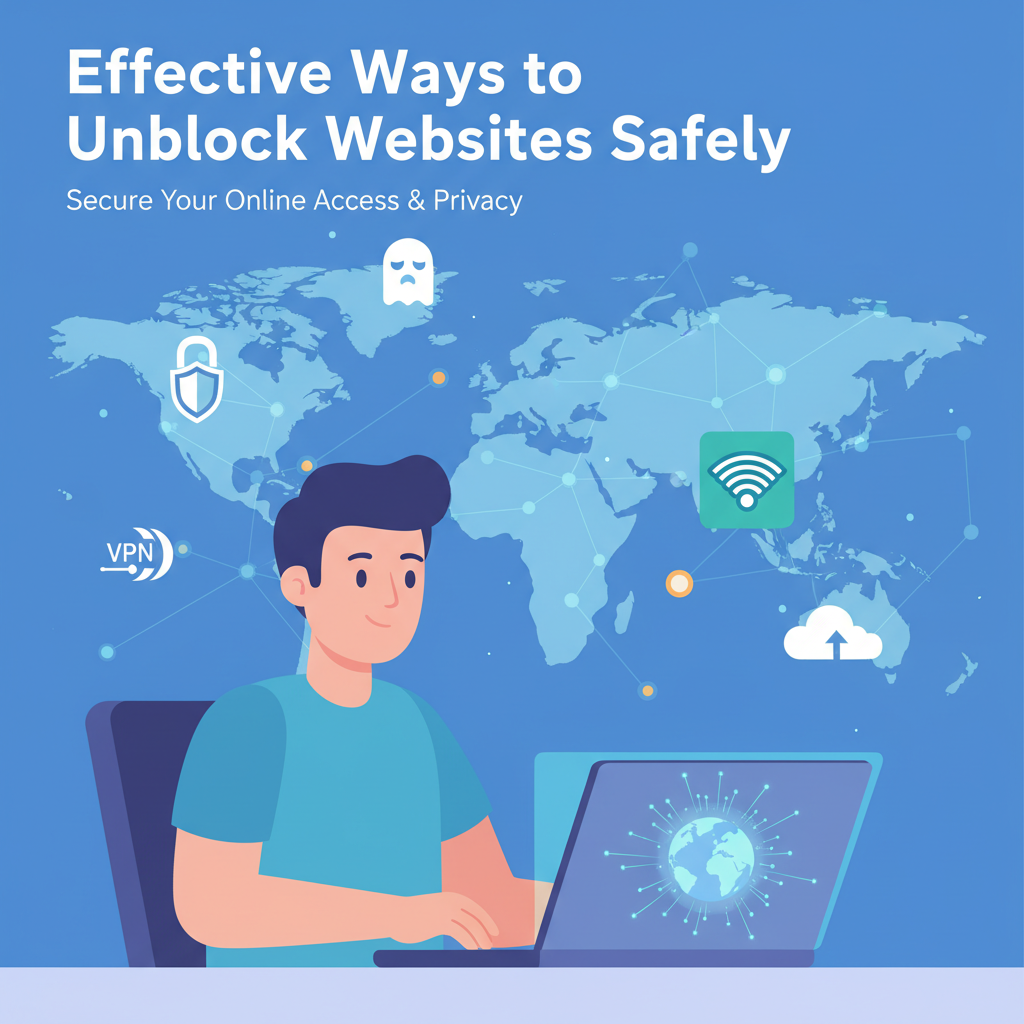
Many websites are blocked due to geographic restrictions, workplace policies, or government censorship. In this article, you’ll discover proven and secure methods to bypass these barriers. We’ll explore the best tools and practices to help you access your desired content, all while staying safe online and respecting legal considerations worldwide.
Proven Methods to Unblock Websites
Many websites are inaccessible in various regions and institutions due to reasons such as geo-restrictions, workplace or school internet policies, and government censorship. According to Wikipedia, geo-blocking is a technique used to limit access to Internet content based upon the user’s geographical location, often enforced by copyright holders or service providers. Schools and workplaces tend to restrict access to particular websites to reduce distractions, conserve bandwidth, or ensure compliance with organizational rules. Government censorship blocks websites to control the flow of information for political, cultural, or security reasons, examples being the Great Firewall of China or content filtering in the Middle East.
To circumvent these blockers, several proven tools exist. Virtual Private Networks (VPNs) are among the most effective solutions. By encrypting all your internet traffic and routing it through a server in another location, VPNs disguise your real IP address, making it appear as though you are accessing the web from a different country. This not only helps bypass restrictions but also significantly enhances your privacy and security by encrypting your data, shielding your online activities from prying eyes.
Proxy servers act as intermediaries, relaying your traffic to the blocked website. While proxies can be effective for accessing simple web content, they often lack encryption and are more vulnerable to traffic interception, making them less suitable for sensitive activities.
The Tor browser utilizes the Tor network to anonymize your Internet connection via multiple encrypted relays. This can evade censorship robustly, but may reduce browsing speed and draw attention in highly restrictive environments.
Changing DNS settings to alternative domain resolvers, like Google DNS or Cloudflare, can sometimes bypass blocks at the DNS level, though this method is limited if deep packet inspection is deployed.
Privacy and security should always be a top priority. Users should select trustworthy providers and be aware that, in some regions, bypassing restrictions might contravene local laws or organizational policies. Always consider the legal implications before you attempt to unblock any content.
Conclusions
Unblocking websites is both achievable and safe when using the right methods. From VPNs to proxy servers and browser extensions, the options available allow users to regain access to restricted content. Always ensure your approach prioritizes privacy and respects local laws. Stay informed so your online experience remains open and secure wherever you are.