

 Русский
 Bahasa Indonesia
 فارسی
فارسی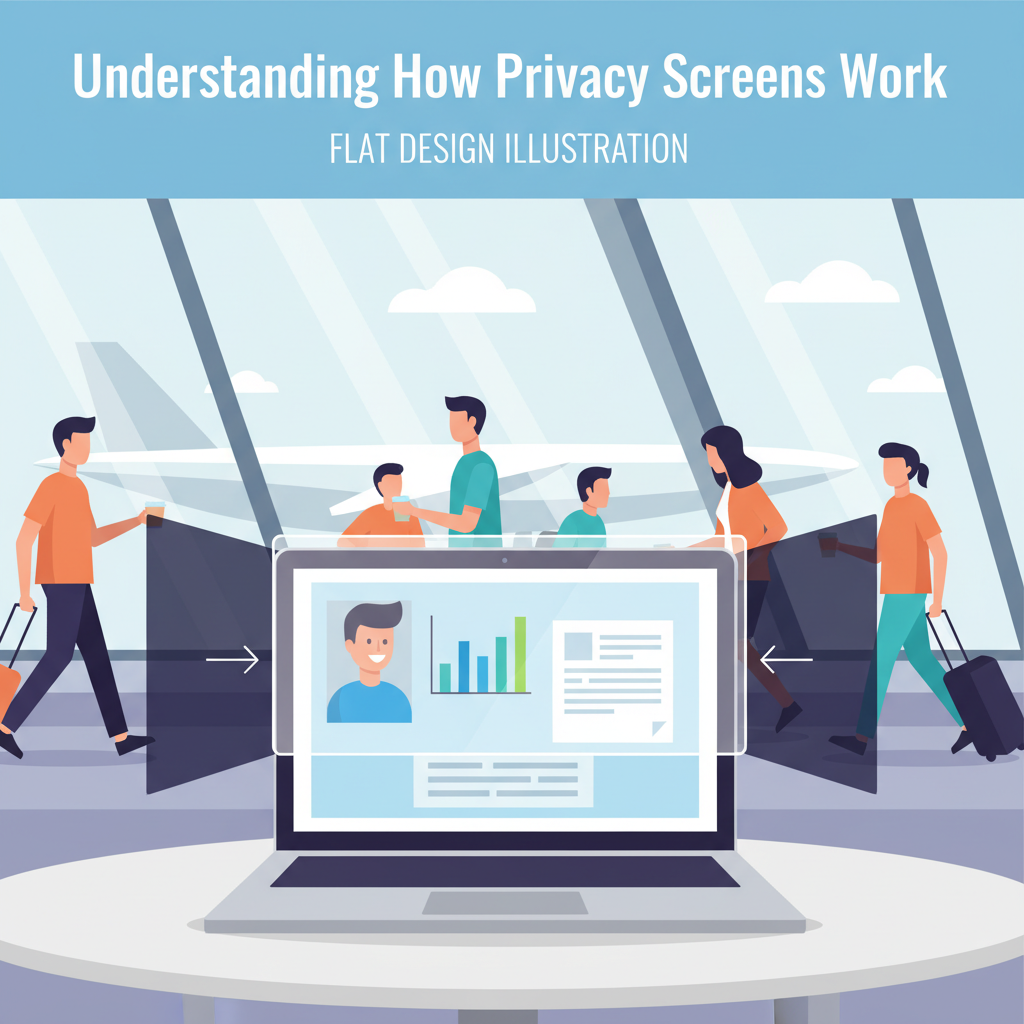
Privacy screens are essential tools for safeguarding sensitive information in public spaces. They are widely used in offices, airports, and even at home to prevent prying eyes from viewing on-screen data. In this article, we explore the technology behind privacy screens, how they work, and their benefits for protecting your digital privacy.
The Science and Technology Behind Privacy Screens
At the heart of privacy screen technology lies the advanced application of micro-louver technology, a principle inspired by window blinds. Micro-louvers are ultra-thin, precisely aligned vertical slats embedded within the layers of a privacy filter. When placed over a laptop, monitor, or mobile device screen, these micro-louvers restrict the transmission of light to a narrow, direct pathway. As a result, only viewers positioned directly in front of the screen enjoy a clear, unobstructed view, while anyone off-axis—typically beyond 30 to 60 degrees—sees only a darkened or completely black display. This unique mechanism safeguards sensitive information in offices, public transit, libraries, and educational settings, where accidental or deliberate visual breaches are a concern.
Privacy screens are typically constructed from multiple layers of durable polycarbonate or acrylic materials, chosen for their optical clarity and resilience. The manufacturing process ensures seamless integration of micro-louvers, balancing both light transmission for the user and opacity for onlookers. For different devices, from laptops and desktop monitors to tablets and smartphones, privacy screens are engineered to match diverse display technologies, ensuring compatibility with touchscreens and varying aspect ratios.
Technical insights, as detailed in resources like Wikipedia, highlight benefits such as significant reduction in visual hacking and increased screen confidentially. However, there are limitations: the narrowing of viewing angles may lead to reduced screen brightness and slightly muted color reproduction, as the micro-louvers filter out some of the light. Extended use may contribute to eye strain due to the need for higher brightness settings, a trade-off users must consider. Despite these minor drawbacks, privacy screens remain invaluable for environments demanding data privacy without compromising usability for the primary user.
Conclusions
Privacy screens are effective solutions for maintaining visual data security in various environments. By incorporating advanced optical technologies, they limit viewing angles and help protect against visual hacking. Whether for corporate, educational, or personal use, privacy screens are a reliable choice for enhancing confidentiality and peace of mind in today’s connected world.