

 Русский
 Bahasa Indonesia
 فارسی
فارسی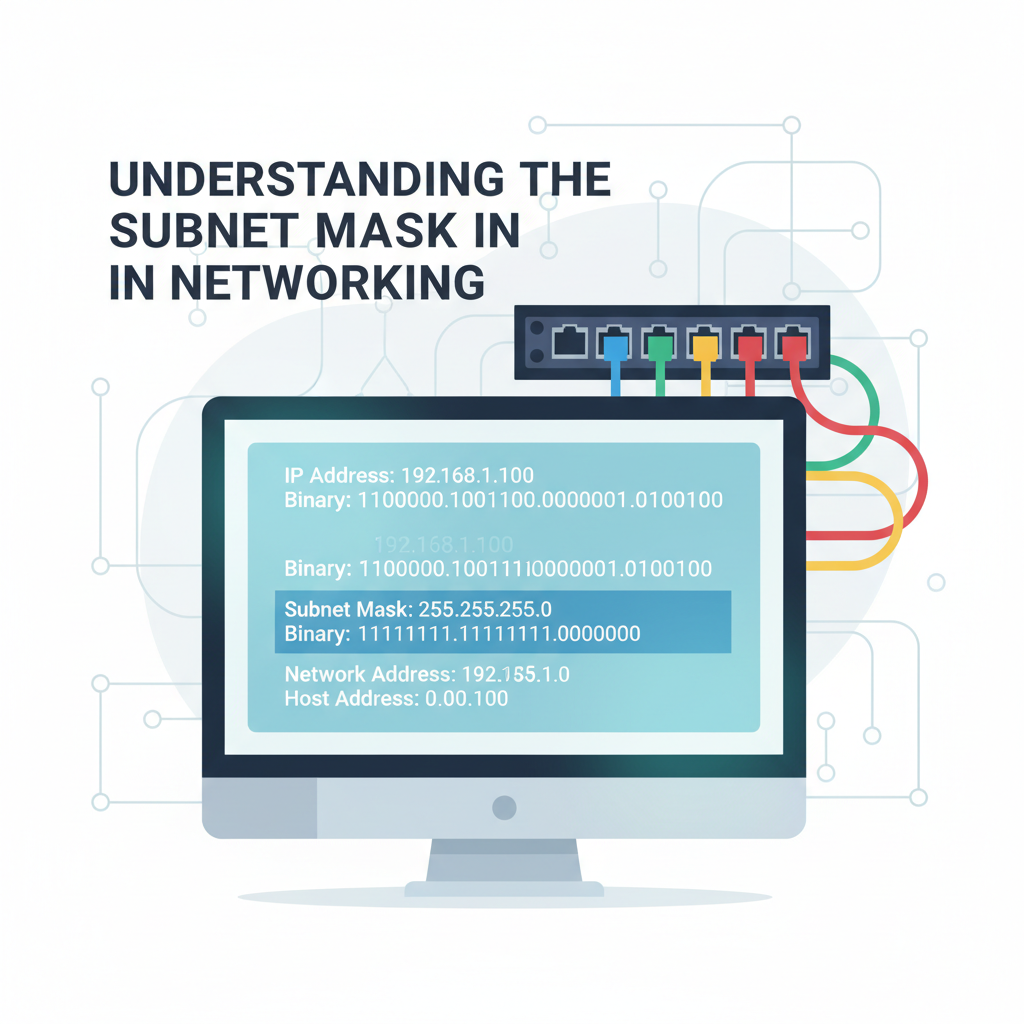
A subnet mask is a fundamental concept in computer networking that plays a critical role in dividing and managing IP addresses within a network. This article explains what a subnet mask is, how it functions, and why it’s essential for organizing efficient communication across digital networks.
How Subnet Masks Work and Why They Matter
A subnet mask is a 32-bit value used in IPv4 networking that determines how an IP address is split into the network and host sections. Structurally, the subnet mask looks similar to an IP address, often seen in the familiar format like 255.255.255.0. The binary representation of a subnet mask distinguishes which portion of the IP address identifies the network, and which part can be used for devices (hosts) within that network. The consecutive ones in the subnet mask represent the network portion, while the trailing zeros indicate the host part. For example, in 255.255.255.0, the first 24 bits (all ones) define the network segment, leaving the last 8 bits for host addresses.
Subnet masks are vital for subnetting, a process that breaks a larger network into smaller, more manageable sub-networks. This division improves network organization by reducing congestion, optimizing routing, and isolating network traffic. Limiting the broadcast domain within each subnet helps prevent excessive broadcast traffic, reducing the risk of broadcast storms and increasing overall network efficiency and security. For instance, an organization might partition its 192.168.1.0/24 network (subnet mask 255.255.255.0) into two smaller /25 subnets (subnet mask 255.255.255.128), isolating departments and restricting access.
Security is enhanced because devices in separate subnets cannot directly communicate with each other unless routing is configured, minimizing unauthorized access. Subnet masks are often paired with CIDR notation, which simplifies mask representation; for example, 255.255.255.0 is written as /24. While IPv6 uses prefix lengths like /64, the concept is rooted in defining which bits are reserved for network identification and which are for hosts, preserving clarity and manageability as networks scale.
Conclusions
In summary, a subnet mask is key to efficiently organizing, managing, and securing computer networks. Understanding its structure and operation allows you to better design, scale, and troubleshoot network infrastructure—ensuring seamless data flow. With this foundation, you can confidently approach more advanced networking concepts and support robust digital connectivity.