

 Русский
 Bahasa Indonesia
 فارسی
فارسی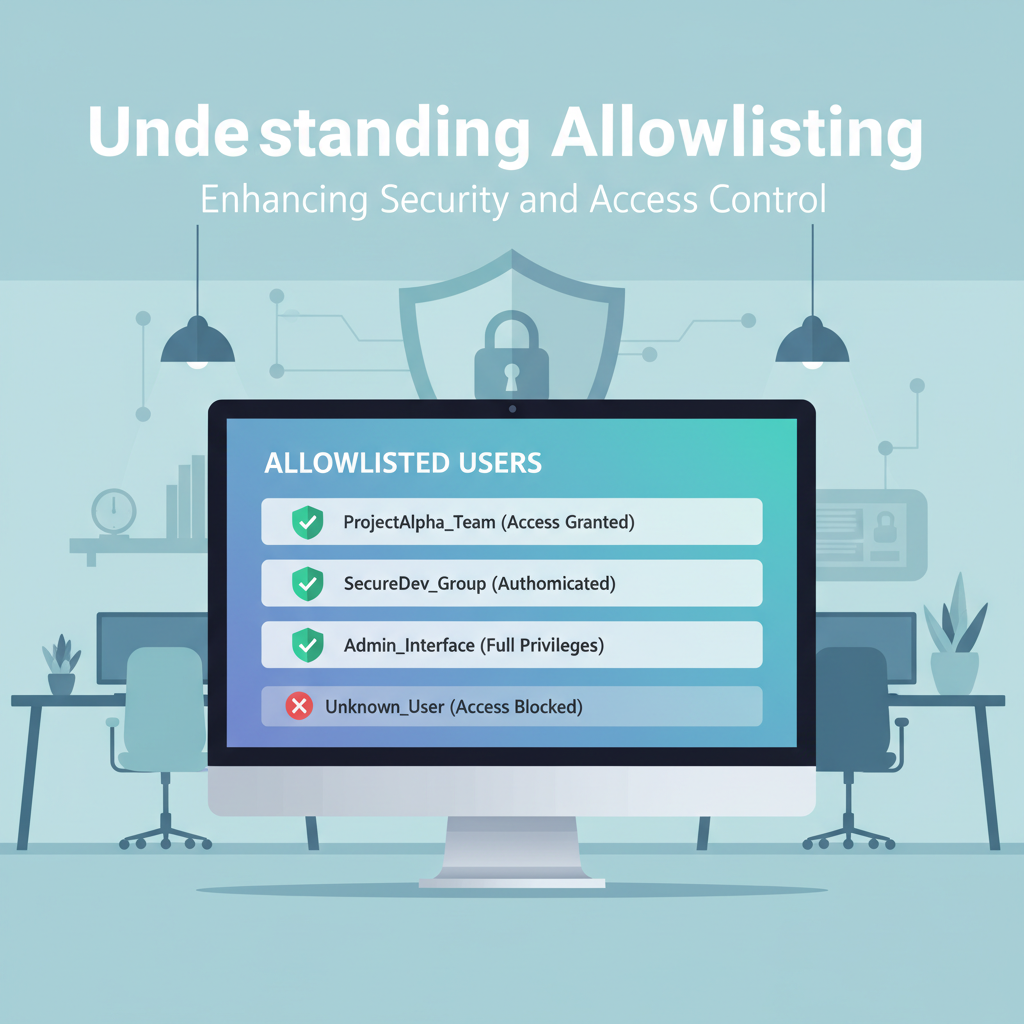
Allowlisting is a vital cybersecurity practice that controls what is permitted to run or access a network, system, or resource. This method effectively blocks unknown or potentially harmful entities while allowing only trusted ones. In this article, you’ll learn what allowlisting is and how it significantly increases security across digital landscapes.
The Fundamentals and Advantages of Allowlisting
Allowlisting, sometimes referred to as “whitelisting,” is a proactive security approach where explicit permission is granted to a predefined set of entities—such as applications, IP addresses, email addresses, or websites—while blocking access from all others. This approach marks a fundamental shift from the traditional blocklisting (or blacklist) strategy, where access is only denied to those entities specifically identified as malicious. Instead of focusing on what is harmful, allowlisting concentrates on what is trusted, ensuring that only verified and approved resources interact with critical networks or devices.
This principle is widely applied in various fields of cybersecurity. For instance, in controlling network access, only certain IP addresses might be allowed to connect to sensitive internal systems, effectively preventing unauthorized external access. In endpoint security, allowlisting permits only approved applications to run, which significantly reduces the risk of malware infection or the execution of unauthorized code. Email platforms utilize allowlisting to ensure messages are received only from trusted senders, thus minimizing phishing attacks and spam.
The security benefits of allowlisting are substantial. By drastically shrinking the universe of what is permitted, organizations reduce their attack surface. For example, documented cases—such as the application control policy implemented in Australia’s Department of Defence—demonstrate a marked decrease in malware incidents following strong allowlisting measures. Allowlisting also simplifies compliance and audit processes since only specified, managed resources are allowed, providing clear accountability and granular control.
Despite its advantages, allowlisting is not without challenges. It requires meticulous management and regular updates to accommodate legitimate changes in business needs. Overly restrictive policies can also disrupt operations if legitimate entities are unintentionally excluded. To achieve balanced security, allowlisting is most effective when integrated with blocklisting and other layered defenses, forming a robust, adaptive strategy necessary in today’s increasingly complex digital environments.
Conclusions
Allowlisting stands out as a proactive security measure by granting access only to approved entities while blocking others. This strategy reduces risk, prevents unauthorized access, and enhances overall digital safety. By implementing allowlisting, organizations and individuals can effectively safeguard their systems from a wide range of threats and maintain stricter control over their environments.