

 Русский
 Bahasa Indonesia
 فارسی
فارسی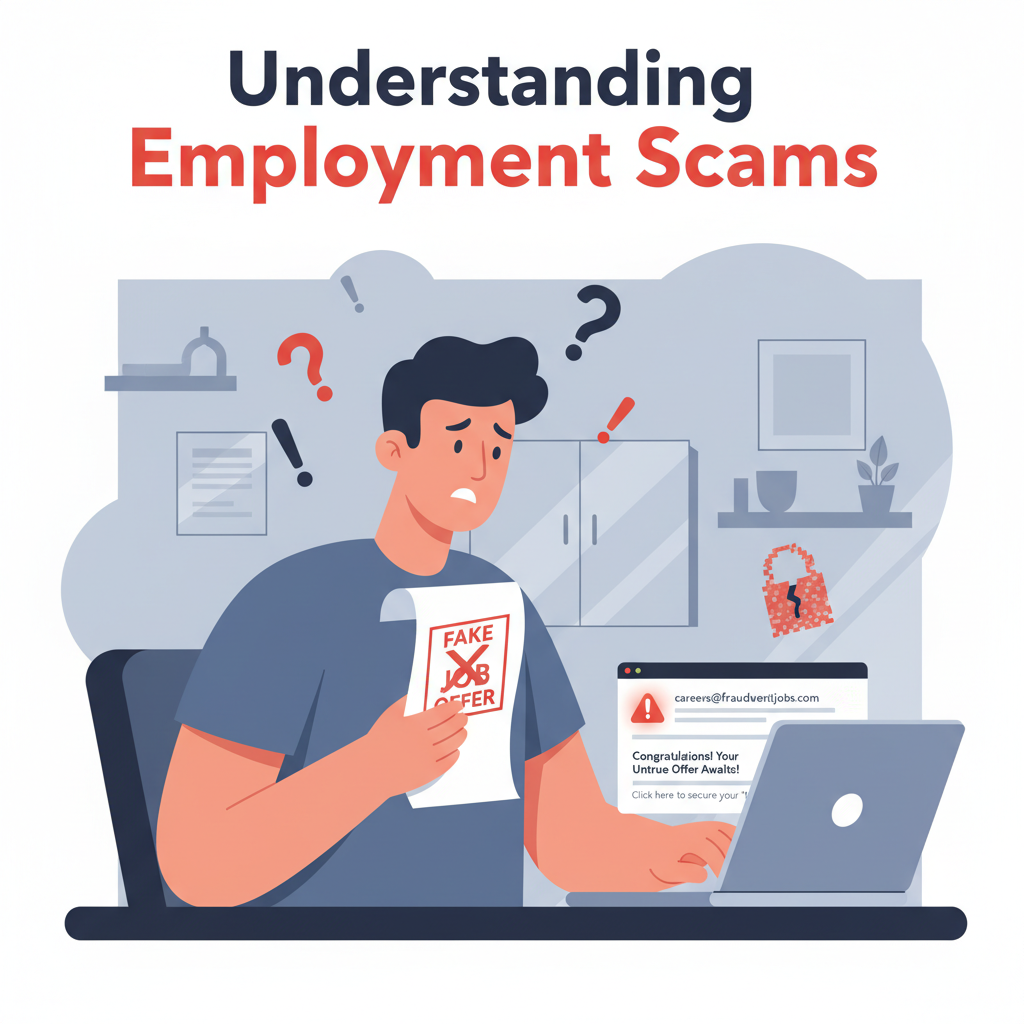
Employment scams are increasingly common in today’s digital world, targeting job seekers through deceptive job offers and fraudulent recruitment tactics. These schemes often exploit hopes for employment, causing emotional and financial harm. In this article, we delve into how these scams work, the dangers they pose, and how you can protect yourself from becoming a victim.
How Employment Scams Work and Their Red Flags
Employment scams have grown increasingly sophisticated, exploiting both modern recruitment technology and the desperation of job seekers. These scams often begin with seemingly legitimate job postings on well-known career websites, unsolicited job offers via email, or approaches from supposed recruiters on professional social media platforms. The core element of an employment scam is deception, with the end goal of obtaining either personal information, such as social security numbers and banking details, or direct financial payment under the guise of processing fees, training costs, or background checks.
Scammers deploy a range of tactics to appear credible. They may clone real company websites, use names of reputable employers, or claim to represent actual recruiters whose identities have been stolen. According to the Federal Trade Commission (FTC), common red flags include job offers with salaries and benefits that seem unrealistically high, urgent requests for confidential data, and communication riddled with grammatical errors or inconsistencies. Interview processes may also seem unprofessional, with little or no real assessment, or moves quickly to a job offer without thorough vetting.
A notorious example is the “fake check” scam, where victims are sent counterfeit checks and asked to send part of the funds back for equipment or travel expenses, only to discover the original check was fraudulent after they’ve sent money. The psychological toll of these scams can be severe: victims often feel embarrassed, anxious, and lose trust in legitimate employers. To guard against such scams, job seekers should verify company contact details, research the recruiter’s professional history, check for a digital presence on official channels, and avoid sharing sensitive information or making payments before thorough verification. Utilize secure websites for communication and always question offers that prompt urgency or request secrecy.
Conclusions
Employment scams pose serious risks, from identity theft to financial loss. By learning how to recognize the warning signs and verifying opportunities before responding, you can avoid falling prey to these deceptive tactics. Staying informed and cautious is key to navigating today’s job market safely.