

 Русский
 Bahasa Indonesia
 فارسی
فارسی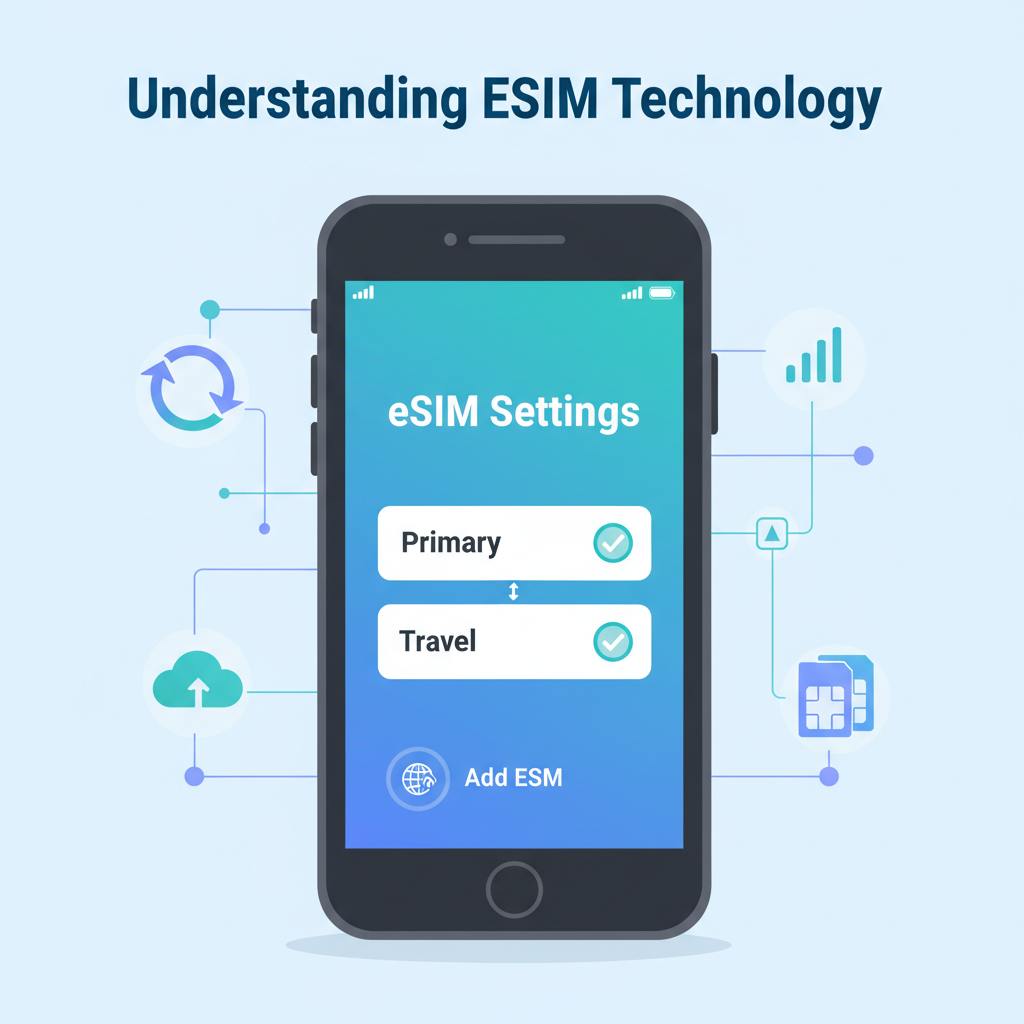
eSIM technology is transforming the way we connect our devices to mobile networks. Unlike traditional SIM cards, an eSIM is embedded directly into your device, offering greater flexibility and convenience. In this article, we’ll explore what an eSIM is, how it works, and why it’s becoming increasingly popular among smartphone users and travelers.
What Is an eSIM and How Does It Work
An eSIM, short for embedded SIM, represents a significant leap forward from the familiar physical SIM cards that have long been central to mobile connectivity. According to Wikipedia, an eSIM is a programmable SIM that is soldered directly onto a device’s internal hardware, rather than existing as a removable plastic chip. This embedded technology unlocks a wealth of new possibilities because it is not tied to the physical act of swapping SIM cards; instead, carrier information can be rewritten digitally, enabling users to change networks or manage multiple mobile profiles without handling any small, delicate pieces.
The activation process for an eSIM is refreshingly straightforward, typically involving the scanning of a QR code provided by a mobile carrier. Upon scanning, a device securely downloads the carrier profile—a set of credentials and configuration necessary for network access—directly onto its internal eSIM chip. This streamlined, digital-first process not only accelerates setup but also paves the way for devices that don’t need SIM trays at all.
Compatibility for eSIM technology has expanded rapidly. Major smartphone manufacturers, including Apple, Samsung, and Google, now offer eSIM support across many flagship models. The technology also powers advanced smartwatches, tablets, laptops, and even some IoT devices, fostering seamless cellular connectivity across a growing ecosystem.
The key advantages of eSIMs include the ability to switch carriers or activate international plans with just a few taps—making them particularly valuable for frequent travelers or those needing multiple numbers for work and personal use. Additional benefits include enhanced security, as the chip cannot be as easily removed if a device is lost or stolen. While carrier adoption has been swift in regions like North America, Europe, and parts of Asia, global rollout is ongoing, setting the stage for eSIMs to become the standard and simplify mobile connectivity industry-wide.
Conclusions
In summary, eSIM technology brings new levels of convenience and flexibility to mobile connectivity. By removing the need for physical SIM cards, users can easily switch carriers, manage multiple profiles, and enjoy greater freedom when traveling. As more devices and networks adopt this technology, eSIM is set to become the standard for future connectivity.