

 Русский
 Bahasa Indonesia
 فارسی
فارسی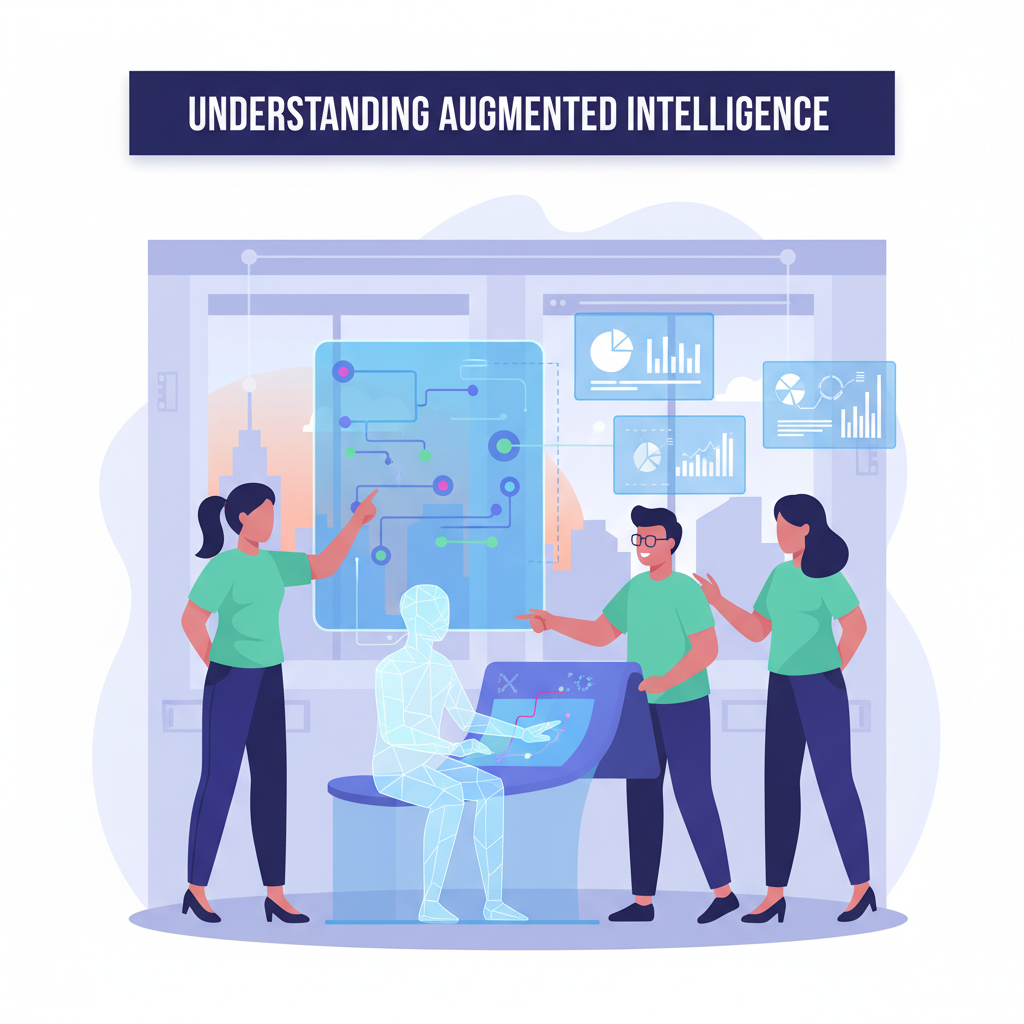
Augmented intelligence is reshaping how we work and make decisions by combining the strengths of humans and artificial intelligence. Unlike AI that aims to replace people, augmented intelligence focuses on empowering users with improved insights and support. In this article, we will explore what augmented intelligence is, how it works, and its real-world impact across different industries.
The Essence and Applications of Augmented Intelligence
Augmented intelligence stands apart from traditional artificial intelligence by focusing not on replacing human intelligence, but on extending and supporting it. The core principle behind augmented intelligence is collaboration: sophisticated technologies like machine learning and natural language processing operate in tandem with human judgment, each contributing unique strengths to the decision-making process. Rather than automating every task, augmented intelligence systems are designed to provide context, insights, and recommendations, enabling people to make faster, more informed, and more accurate choices.
Unlike classic AI, which often strives for full automation—removing the need for human involvement—augmented intelligence assumes that machines and humans are best when working together. Machine learning algorithms rapidly sift through massive data sets to detect patterns that might go unnoticed by even the most skilled professionals. Natural language processing empowers systems to interpret human language, extract valuable meaning from unstructured data, and even facilitate seamless interactions with users. Data analytics technologies further augment human understanding by providing visualizations, forecasts, and interactive models.
In healthcare, augmented intelligence assists physicians in diagnosing rare diseases by surfacing comparative case studies and up-to-date research within seconds. In finance, it augments analysts’ due diligence with real-time risk assessments and predictive analytics. For customer service, virtual agents powered by the technology support human representatives by providing relevant solutions, historical context, and sentiment analysis instantaneously.
Challenges still exist: integrating these systems into existing workflows, addressing data privacy concerns, and ensuring transparency in how recommendations are generated. Ethical considerations—such as avoiding bias in training data—remain at the forefront. Nonetheless, the future of augmented intelligence is inherently collaborative, amplifying human strengths and reshaping how we solve complex problems.
Conclusions
Augmented intelligence delivers value by enhancing—not replacing—human abilities. By leveraging advanced technologies to support people, organizations can solve complex problems more effectively. As adoption increases, augmented intelligence promises to create smarter tools and a dynamic collaboration between humans and machines, driving innovation and improving decision-making in various sectors.