

 Русский
 Bahasa Indonesia
 فارسی
فارسی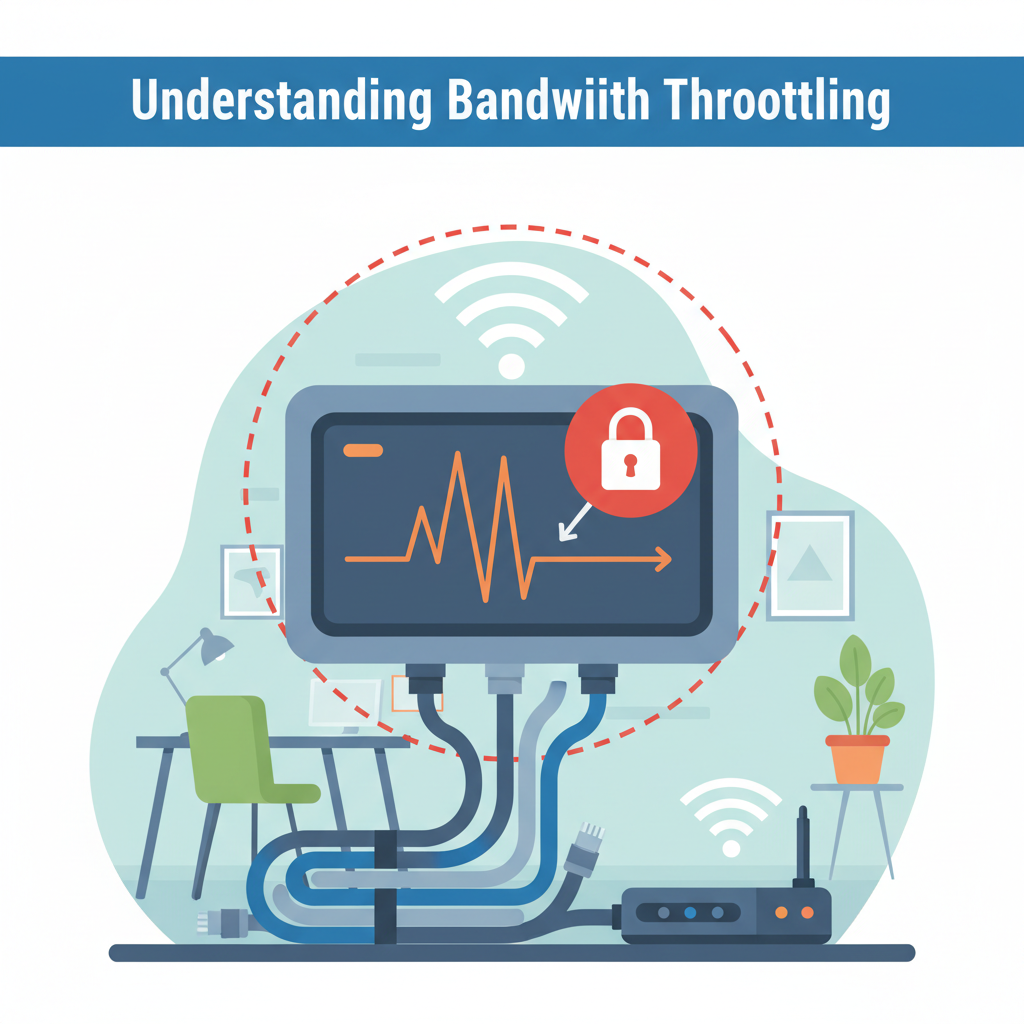
Bandwidth throttling is a common yet often misunderstood practice in the world of internet connectivity. This article explains what bandwidth throttling is, why it happens, and its effects on users. By understanding these aspects, you can be better prepared to identify and potentially remedy throttling situations, ensuring you get the most from your internet connection.
Explaining Bandwidth Throttling and Its Effects
Bandwidth throttling, as defined by Wikipedia, refers to the intentional slowing or restricting of internet service by an Internet Service Provider (ISP). This process involves the deliberate limitation of data transfer rates for certain users, applications, or at specific times. ISPs employ bandwidth throttling as a network management technique to control traffic and ensure that the overall network remains functional and efficient, particularly during periods of high demand.
ISPs often use bandwidth throttling to manage congestion during peak internet usage hours when large volumes of data strain the network. By selectively slowing down traffic to certain users or services, ISPs can prevent the network from becoming overloaded. Another common reason is the enforcement of data caps; when a customer exceeds a predetermined monthly allowance, the ISP may throttle their connection for the remainder of the billing cycle. Additionally, ISPs might restrict access to data-intensive activities such as video streaming, peer-to-peer file sharing, or even online gaming, in order to prioritize general web browsing or other services.
For users, the effects of bandwidth throttling are notable and often disruptive. Throttling can lower download and upload speeds, cause increased buffering for streaming media, and lead to lag or latency spikes in online gaming sessions. Users might recognize signs of throttling when their connection consistently slows down during certain hours, or when some websites and services perform significantly worse than others.
If you suspect your connection is being throttled, there are strategies you can try. Conduct speed tests at different times and across various services to reveal speed discrepancies. Reach out to your ISP to inquire about your connection, and review your data usage. For some types of throttling, privacy solutions such as VPNs can help obscure your internet activity, potentially bypassing restrictions imposed by your ISP.
Conclusions
Bandwidth throttling can significantly affect your browsing, streaming, and gaming experiences. By understanding what it is and why internet providers use it, you can take proactive steps if you suspect throttling is affecting your connection. Staying informed helps you make smarter choices about your internet usage and provider.