

 Русский
 Bahasa Indonesia
 فارسی
فارسی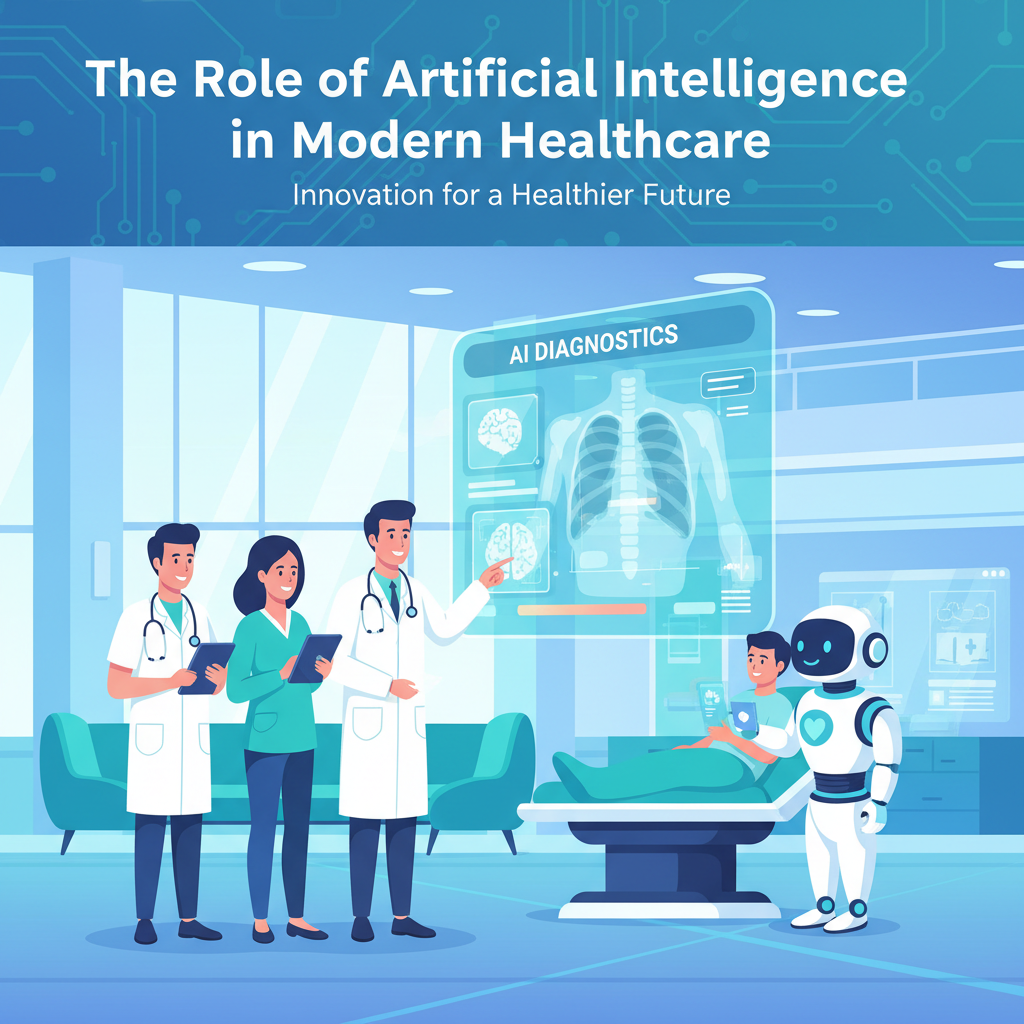
Artificial Intelligence (AI) is revolutionizing healthcare, ushering in smarter diagnostics, personalized treatments, and streamlined patient care. This article delves into the many ways AI integrates into medical practice and explores its profound impacts on outcomes, efficiency, and the future of healthcare worldwide.
Understanding Artificial Intelligence in Healthcare
Artificial intelligence, as defined by Wikipedia, refers to the simulation of human intelligence processes by machines, particularly computer systems. These processes include learning, reasoning, problem-solving, perception, and language understanding. In healthcare, AI does not operate as a standalone monolithic technology but incorporates various subfields such as machine learning (ML) and deep learning. Machine learning involves algorithms that can identify patterns in data and make predictions with minimal explicit programming. Deep learning, a specialized branch of machine learning, utilizes artificial neural networks to process vast amounts of complex data and uncover insights that may be unattainable through conventional analysis.
The application of these technologies in medicine is both broad and profound. AI-driven tools are now critical in assisting with diagnostics by interpreting complex medical images, laboratory results, and genomic information to identify diseases more quickly and accurately. In drug discovery, machine learning models accelerate the identification of promising compounds and predict their effects, drastically reducing research timelines. Predictive analytics harnesses vast clinical datasets to anticipate patient outcomes, inform preventative care strategies, and optimize resource allocation. These advances signify a paradigm shift, enabling healthcare professionals to deliver more precise, data-driven, and proactive care than ever before.
AI Revolutionizing Medical Diagnostics
Artificial intelligence (AI) is broadly defined as the simulation of human intelligence processes by machines, particularly computer systems. According to Wikipedia, AI includes learning, reasoning, and self-correction. Within this field, it’s important to distinguish between *artificial intelligence*, *machine learning*, and *deep learning*. AI is the overarching discipline involving machines performing tasks that typically require human intelligence. *Machine learning* (ML) is a subset of AI that allows systems to automatically learn and improve from experience without explicit programming, using algorithms that detect patterns in data. *Deep learning* goes a step further, utilizing artificial neural networks with multiple layers to analyze various factors of data; this is especially effective for complex tasks like image and speech recognition.
These advancements have paved the way for significant changes in healthcare. Technologies based on AI, ML, and deep learning are now integral in key areas: *diagnostics* use AI to interpret imaging and pathology data; *drug discovery* leverages ML to model drug interactions and predict efficacy; and *predictive analytics* anticipates patient outcomes, supporting proactive care. These applications are enabling clinicians to make more accurate and timely decisions, enhancing patient care through computational intelligence that augments traditional medical expertise.
The Growth of Personalized Medicine through AI
Artificial intelligence (AI), as defined on Wikipedia, is the simulation of human intelligence processes by machines, particularly computer systems. These processes include learning, reasoning, problem-solving, perception, and language understanding. Within this broad category, there are critical distinctions: AI encompasses any machine-based system that replicates intelligent behavior, while machine learning (ML), a subset of AI, involves algorithms that allow machines to learn from data and improve over time. Deep learning is a further subset of machine learning that uses artificial neural networks with multiple layers to analyze complex data patterns.
In healthcare, these advancements have led to radical changes. AI and its subsets have been introduced through the analysis of large datasets, automation of repetitive tasks, and support of clinical decision-making. The primary application areas include diagnostics, where deep learning systems interpret medical images for disease detection with greater speed and sometimes accuracy than human practitioners. In drug discovery, machine learning rapidly screens compounds, predicting their effects, thereby accelerating the development process. Predictive analytics uses AI to anticipate outcomes such as patient risk for disease relapse or complications, drawing from patient history, real-time monitoring, and population data. These technologies are now foundational to the improvement of accuracy, efficiency, and personalization within modern healthcare systems.
AI Enhancing Patient Care and Hospital Operations
Artificial intelligence, as outlined by Wikipedia, refers to the simulation of human intelligence processes by machines, especially computer systems. These processes include learning, reasoning, and self-correction. Within AI, a crucial distinction exists between general artificial intelligence, which attempts to mimic human cognition broadly, and more specific forms like machine learning and deep learning. Machine learning is a subset of AI where algorithms learn from and make predictions based on data. Deep learning, a further subset, utilizes neural networks with many layers to analyze various factors of data, often leading to enhanced performance with large amounts of complex information.
The introduction of these technologies in healthcare has led to significant transformation. AI-driven tools are now widely used for analyzing medical images, predicting patient outcomes, and assisting in early diagnosis of diseases such as cancer. Machine learning models facilitate personalized medicine, enabling treatment plans tailored to the unique genetic makeup and history of each patient. Deep learning’s capacity for pattern recognition is aiding in both drug discovery and the identification of rare conditions. Furthermore, AI is foundational in predictive analytics, helping healthcare providers anticipate patient needs and optimize resource allocation, ultimately impacting every stage of patient care.
Ethical Considerations and the Future of AI in Healthcare
Artificial intelligence (AI) in healthcare refers to computer systems that mimic human cognitive functions to analyze complex medical data. According to Wikipedia, AI encompasses machines capable of performing tasks that typically require human intelligence, such as reasoning, learning, and problem-solving. Within this umbrella, *machine learning* (ML) involves algorithms that improve automatically through experience, while *deep learning* is a specialized branch of ML inspired by the human brain’s neural networks, excelling at processing large, unstructured datasets such as medical images or electronic health records.
These technologies have steadily integrated into healthcare environments over the past decade. AI-powered image recognition is now commonplace in radiology, analyzing CT scans and X-rays with precision equal to or surpassing human experts. Machine learning algorithms help identify patterns in patient data for early detection of conditions like sepsis or diabetes, moving towards personalized, predictive care. Additionally, AI streamlines drug discovery, reducing the time and costs associated with bringing new treatments to market. Predictive analytics, another vital application, leverages vast datasets to foresee outbreaks, readmission risks, or medication adherence challenges—ultimately supporting more proactive and effective patient care.
Conclusions
Artificial intelligence is reshaping healthcare through enhanced diagnostics, personalized medicine, and operational efficiency. Its continued evolution promises to further improve patient outcomes and optimize medical resources. Staying updated on AI advancements is crucial for both patients and professionals as healthcare moves toward a smarter, more holistic future.