

 Русский
 Bahasa Indonesia
 فارسی
فارسی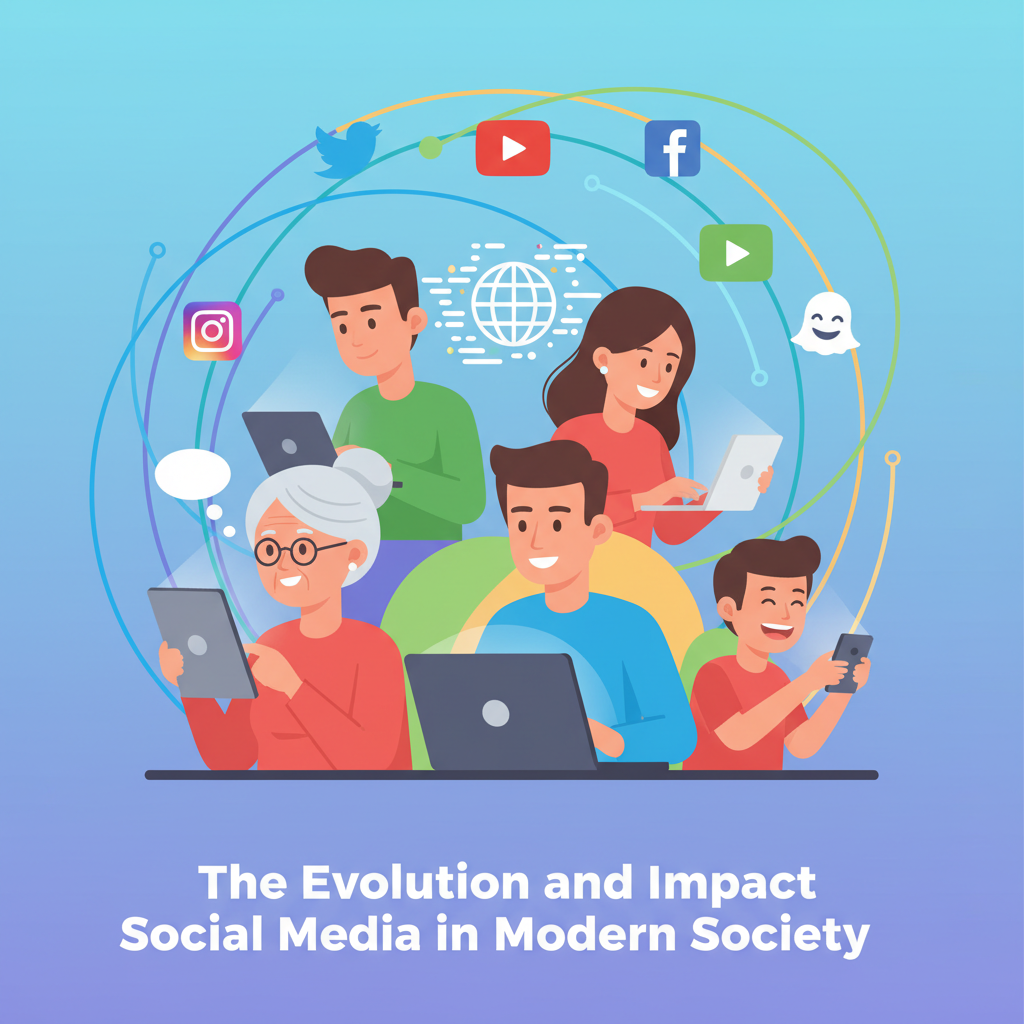
Social media has transformed the way we communicate, share information, and interact globally. From connecting friends to influencing movements, its role is significant in modern society. This article delves into social media’s development, its profound effects on individuals and communities, the growing concerns it raises, and what the future might hold.
The Rise of Social Media Platforms
The inception and rapid ascent of major social media platforms have redefined the parameters of digital interaction. Facebook, launched by Mark Zuckerberg and his Harvard peers in 2004, catalyzed a new era by interlinking college communities before scaling to a global user base, now in the billions. Its ability to adapt—introducing features like News Feed, Marketplace, and targeted advertising—transformed personal connections and business outreach alike. Twitter, founded in 2006 by Jack Dorsey and collaborators, revolutionized the concept of real-time microblogging with its concise format, allowing ideas, news, and debates to spread instantly across continents. Instagram, the brainchild of Kevin Systrom and Mike Krieger, debuted in 2010, setting trends with its emphasis on visual storytelling and filters, eventually attracting Facebook’s acquisition in 2012 and integrating Stories and Reels to compete with emerging rivals. TikTok, developed by ByteDance and launched globally in 2018, disrupted norms with short-form video content and AI-driven recommendations, rapidly attracting a young, vibrant demographic. These platforms have bridged geographical and cultural divides, fostering communities, activism, and innovation, while continuously responding to the evolving preferences and privacy concerns of their diverse users.
Influence on Communication and Relationships
The emergence and rapid ascension of social media platforms have profoundly transformed how people interact, share, and consume information worldwide. Launched in 2004 by Mark Zuckerberg and his co-founders, Facebook initially targeted university students but soon expanded globally, reaching more than 2.8 billion active users by 2021. Its timeline of innovations—from the News Feed to the introduction of Marketplace—demonstrates its pivotal role in shaping digital connectivity. Twitter, created by Jack Dorsey, Noah Glass, Biz Stone, and Evan Williams in 2006, pioneered real-time communication with its microblogging format, making hashtags and trending topics central to public discourse. Instagram, conceived by Kevin Systrom and Mike Krieger in 2010, revolutionized visual storytelling, growing rapidly after Facebook’s acquisition in 2012. Its emphasis on images and stories over text reshaped online engagement for younger audiences. TikTok, developed by ByteDance and launched internationally in 2018, pushed creative boundaries through short-form video, quickly garnering hundreds of millions of users. These platforms have not only connected people regardless of borders or backgrounds, but continuously evolved features and algorithms to foster new forms of community, influence cultural trends, and redefine digital communication.
Social Movements and Information Sharing
The digital communication landscape underwent a profound transformation with the rise of major social media platforms. Facebook, launched in 2004 by Mark Zuckerberg and his Harvard peers, evolved from a niche college directory to a global community that redefined personal interaction online. It introduced a novel approach to sharing personal updates, photos, and connections, quickly expanding beyond universities and shaping global social norms. Twitter, founded in 2006 by Jack Dorsey, Noah Glass, Biz Stone, and Evan Williams, revolutionized real-time news and public discourse with its 140-character model, fostering rapid, succinct communication and ushering in the era of viral hashtags and trending topics. Instagram, created by Kevin Systrom and Mike Krieger in 2010, popularized visual storytelling, enabling users to broadcast their experiences through carefully curated images and stories, thus influencing aesthetics and marketing strategies worldwide. TikTok, originating as Douyin in China in 2016 and launched internationally as TikTok in 2018, capitalized on short-form video content, democratizing creativity and reaching unprecedented international audiences. These platforms did not merely connect diverse groups; they became instrumental in shaping cultural trends, mobilizing communities, and amplifying voices across geographical and societal boundaries.
Risks and Challenges Associated with Social Media
Social media platforms emerged in the early 2000s, fundamentally transforming how people interact and share information. Facebook, founded by Mark Zuckerberg in 2004, quickly evolved from a Harvard-only network to the world’s largest social network, emphasizing real-name connections and personalized news feeds. Twitter, launched in 2006 by Jack Dorsey, Biz Stone, and Evan Williams, introduced the microblogging format, allowing rapid dissemination of information through concise messages, hashtags, and trending topics, which played a pivotal role in live event coverage and activism.
Instagram was created by Kevin Systrom and Mike Krieger in 2010, emphasizing visual storytelling through photos and short videos, fostering new communities around lifestyle, art, and culture. Its introduction of Stories and Reels brought real-time, ephemeral content to the forefront. TikTok, developed by ByteDance and launched internationally in 2017, redefined engagement with short-form, algorithm-driven video content, rapidly gaining popularity among younger audiences and spawning viral trends.
These platforms have bridged geographical divides and fostered global communities, enabling diverse user groups to interact, collaborate, and share experiences on an unprecedented scale. Social networks have become indispensable in communication, activism, commerce, and cultural exchange, continuously adapting to shifting digital habits and technological innovations.
The Future of Social Media Trends and Predictions
In the early 2000s, the digital landscape began shifting as pioneering social media platforms emerged, fundamentally altering how people interacted online. **Facebook**, launched in 2004 by Mark Zuckerberg and his college roommates, initially targeted Harvard students before rapidly expanding to millions worldwide. This platform introduced the concept of personal profiles, friend networks, and news feeds, creating unprecedented opportunities for both personal connection and mass communication. **Twitter**, founded in 2006 by Jack Dorsey, Biz Stone, and Evan Williams, distinguished itself by popularizing microblogging through its 140-character posts, or ‘tweets’. This concise format encouraged real-time sharing of thoughts and news, making Twitter a crucial platform for global discourse.
**Instagram** entered the scene in 2010, revolutionizing digital interaction by emphasizing visual storytelling through photos and, later, short videos. Its founders, Kevin Systrom and Mike Krieger, tapped into the smartphone camera boom, rapidly attracting millions of users before being acquired by Facebook in 2012.
Most recently, **TikTok** exploded in popularity after its global launch in 2016 by Chinese company ByteDance. Centered around short, algorithmically curated videos, TikTok fostered viral trends and amplified diverse voices, reshaping content creation and audience engagement. Collectively, these platforms have redefined communication, bridging cultural and geographic divides on a previously unimaginable scale.
Conclusions
Social media remains a powerful force shaping modern society, connecting individuals and influencing culture. As we address its challenges and potential risks, understanding its evolution and impact is vital for leveraging its benefits while mitigating drawbacks. Staying informed will ensure responsible and effective use as we move into the digital future.