

 Русский
 Bahasa Indonesia
 فارسی
فارسی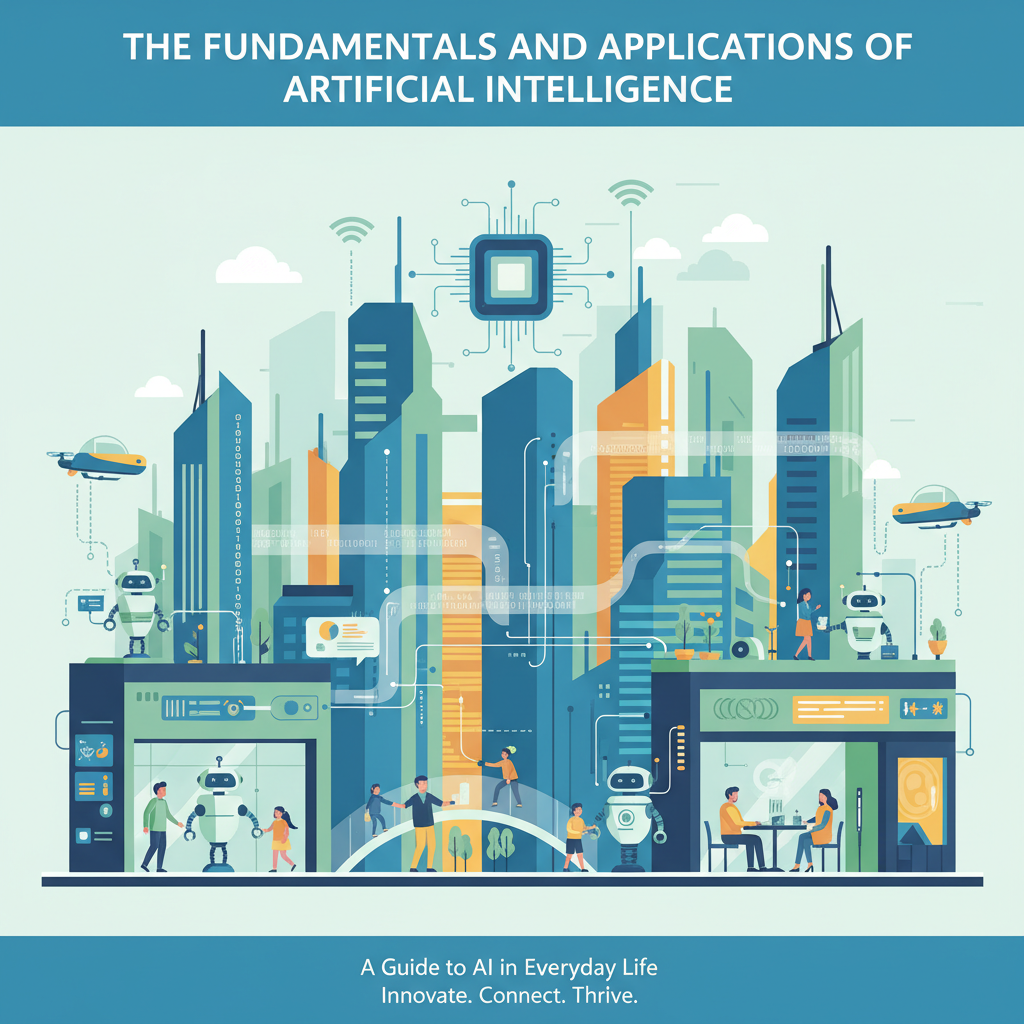
Artificial Intelligence (AI) is reshaping the world by enabling machines to simulate human intelligence. This article delves into AI’s underlying principles, key applications across industries, and how its rapid evolution influences society. Whether new to AI or seeking a deeper understanding, discover how this transformative technology is changing our daily lives and the world at large.
Understanding the Core Principles of Artificial Intelligence
Artificial Intelligence is built on several key principles that enable machines to perform tasks traditionally requiring human intelligence. At the heart of AI lies machine learning, a method where systems learn from data patterns and improve over time without explicit programming. This process often involves training algorithms on vast datasets to make predictions or decisions. Neural networks, inspired by the human brain’s interconnected neurons, serve as the backbone of many AI systems. These networks consist of multiple layers where each “neuron” processes input data and passes it forward, enabling deep learning—a powerful subset responsible for advancements in image and speech recognition.
Natural language processing (NLP) empowers machines to interpret and generate human language, fostering technologies like chatbots, language translation, and sentiment analysis. It leverages statistical techniques and deep learning to understand context, tone, and meaning in text or speech. Crucial distinctions exist between narrow AI, which excels at singular tasks (like playing chess), and general AI, which aspires to replicate the versatile reasoning of a human across many domains. Historical milestones, such as IBM’s Deep Blue defeating a world chess champion and GPT-3 generating human-like text, illustrate the rapid evolution grounded in these foundational concepts.
Key Applications of AI in Everyday Life and Industry
Artificial Intelligence (AI) operates on several core principles that drive its transformative power. Central to AI is machine learning, where systems improve their performance over time by learning from data, allowing them to uncover intricate patterns and make predictions. A fundamental component within this field is the neural network, a computational architecture inspired by the human brain. These networks process inputs through interconnected layers, enabling capabilities such as image recognition and complex decision-making. Another pivotal discipline is natural language processing (NLP), which empowers machines to interpret, generate, and respond to human language, facilitating applications ranging from voice assistants to automated translation.
AI is further categorized into narrow AI, designed for specific tasks like spam filtering or facial recognition, and general AI, a theoretical form of intelligence that can perform any intellectual task a human can. While narrow AI has achieved remarkable success—evident in breakthroughs like AlphaGo’s victory over world chess champions—general AI remains an aspirational goal. These milestones reflect how foundational concepts continually evolve, shaping reliable, adaptable systems that permeate diverse sectors, underscoring the ongoing progression and promise inherent in AI technology.
The Societal Impact and Ethical Considerations of AI
Artificial Intelligence is rooted in several core principles that serve as the building blocks for modern AI technologies. At the heart of AI lies *machine learning*, a method where systems learn patterns from data rather than being explicitly programmed for every task. Through processes like supervised, unsupervised, and reinforcement learning, machine learning enables computers to improve and adapt their performance over time. Underpinning many advances is the concept of *neural networks*, which are computational models inspired by the human brain. These networks consist of interconnected nodes (neurons) organized in layers and are especially effective at recognizing complex patterns in images, speech, and data.
Another key principle is *natural language processing* (NLP), which allows computers to interpret and generate human language, powering applications like chatbots, translation services, and voice assistants. A fundamental distinction in AI is between *narrow AI*—systems specialized in specific tasks, like game-playing or image recognition—and *general AI*, which would exhibit flexible, human-level intelligence across diverse tasks. While most existing AI is narrow, milestones such as IBM’s Deep Blue defeating chess champion Garry Kasparov and the emergence of conversational AI reflect significant progress. These core principles—learning, pattern recognition, and language understanding—form the engine driving AI’s rapid evolution and diverse functionality in technological solutions today.
The Future of Artificial Intelligence
Artificial Intelligence is underpinned by several foundational concepts that enable its impressive capabilities. At its heart lies *machine learning*, an approach where computers identify patterns within vast datasets and make inferences or predictions without being explicitly programmed for specific tasks. This self-optimization distinguishes AI from traditional programming. Amongst machine learning models, *neural networks* stand out: inspired by the human brain, they consist of interconnected layers of nodes (analogous to neurons) that enable systems to recognize complex patterns, such as distinguishing faces in images or transcribing speech.
A core subfield, *natural language processing* (NLP), empowers machines to comprehend, interpret, and generate human language. NLP underlies technologies like chatbots, language translation, and sentiment analysis, allowing AI to meaningfully engage with human communication. It’s crucial to distinguish between *narrow AI*—specialized systems adept at focused tasks such as recommendation engines or voice assistants—and the more aspirational *general AI*, which would perform any intellectual endeavor a human can. Although general AI remains theoretical, narrow AI is routinely deployed in diverse industries.
Milestones such as Deep Blue’s chess victory, Google’s AlphaGo, and the rise of transformer models like GPT underscore evolutionary leaps in AI, demonstrating how these core principles fuel progress and real-world impact.
Conclusions
Artificial Intelligence is a driving force in modern innovation, revolutionizing diverse sectors such as healthcare, education, and business. By understanding its foundations and ethical implications, we are better equipped to harness AI’s potential responsibly. The journey ahead promises further advancements, making AI an essential area of knowledge for individuals and organizations alike.