

 Русский
 Bahasa Indonesia
 فارسی
فارسی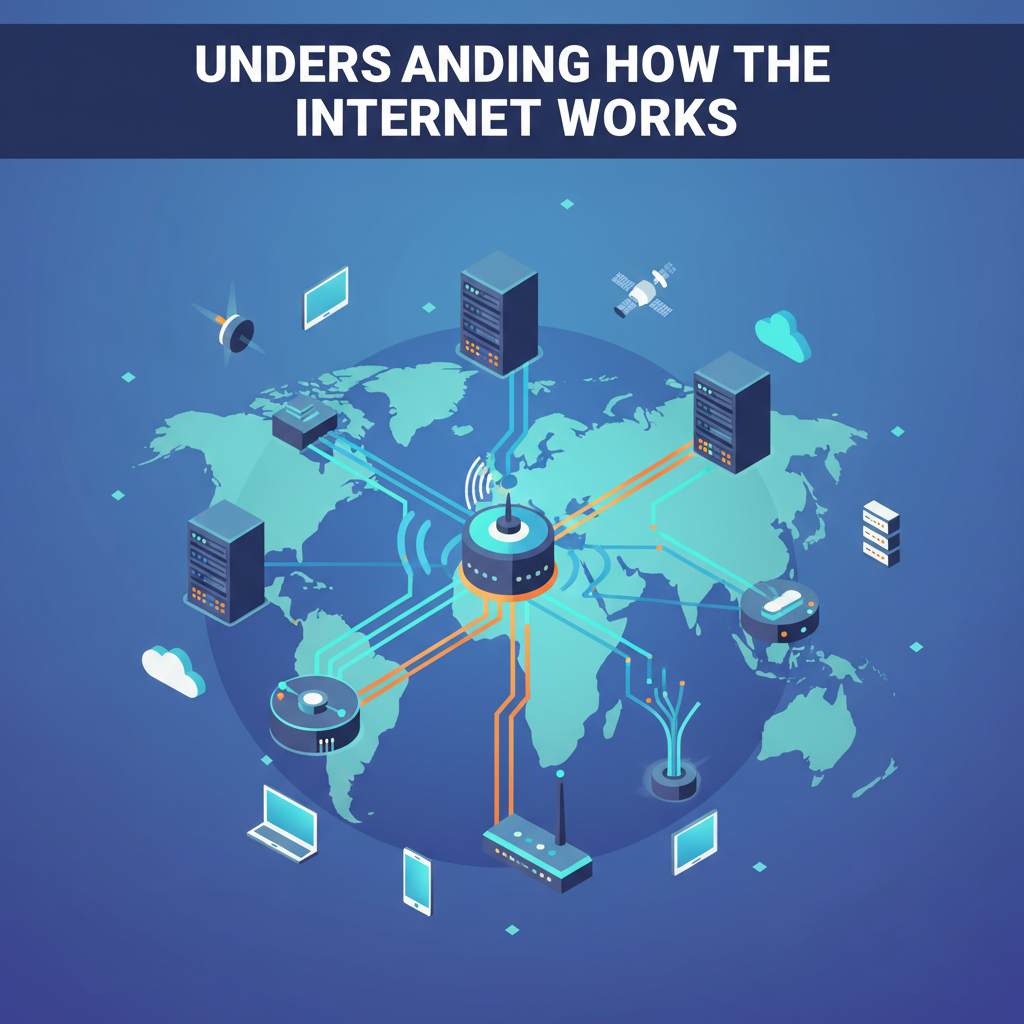
The internet powers almost every aspect of our daily lives—from sending emails and streaming videos to online banking and global connections. But how does this massive, intricate network actually function beneath the surface? In this article, we’ll uncover the mechanisms that make the internet work, explaining key concepts in a clear and accessible way.
Inside the Web Understanding the Internet’s Core Functions
Beneath the user-friendly appearance of the websites and apps we interact with daily, the internet’s core functions rely on an elegant ballet of technology. At its heart, information is transmitted as data split into small, manageable units called packets. Each packet carries a fragment of the original data, stamped with the destination’s IP address and a sequence number, enabling it to navigate a maze of interconnected devices—from local routers and neighborhood hubs, through the sprawling network of your Internet Service Provider (ISP), to vast international cables that traverse continents. These connections are primarily composed of fiber optic cables, transmitting data as beams of light at astonishing speeds, and network hardware such as switches and routers, which direct packets toward their destination based on the most efficient available path.
The reliable transfer of each packet depends on protocols—unwritten rules for digital communication. The most foundational of these is TCP/IP: Transmission Control Protocol ensures all packets arrive and re-assembles them in the correct order, while Internet Protocol handles routing. When you visit a website, another protocol steps in: HTTP (Hypertext Transfer Protocol) or its secure variant, HTTPS, which governs the exchange of web content between browsers and servers.
Domain names, like www.example.com, simplify navigation. Rather than remembering complex numerical IP addresses, users type easy-to-remember names into browsers. The Domain Name System (DNS), a global directory, instantly translates domain names into IP addresses, enabling seamless access. ISPs play a vital role, acting as gateways that connect home networks to the wider internet. Meanwhile, cybersecurity protocols—encryption, secure handshakes, and authentication—are essential, ensuring that data travels safely, even as it crosses multiple, sometimes unsecured, networks. Working in concert, these core functions make possible the fluid, near-instantaneous movement of information that defines the modern web.
Conclusions
In summary, the internet is a vast, interconnected system that relies on sophisticated protocols, servers, and networks to deliver information worldwide. By understanding its mechanics, we can better appreciate the remarkable complexity and reliability of the web, empowering us to use it more effectively and securely in our everyday lives.