

 Русский
 Bahasa Indonesia
 فارسی
فارسی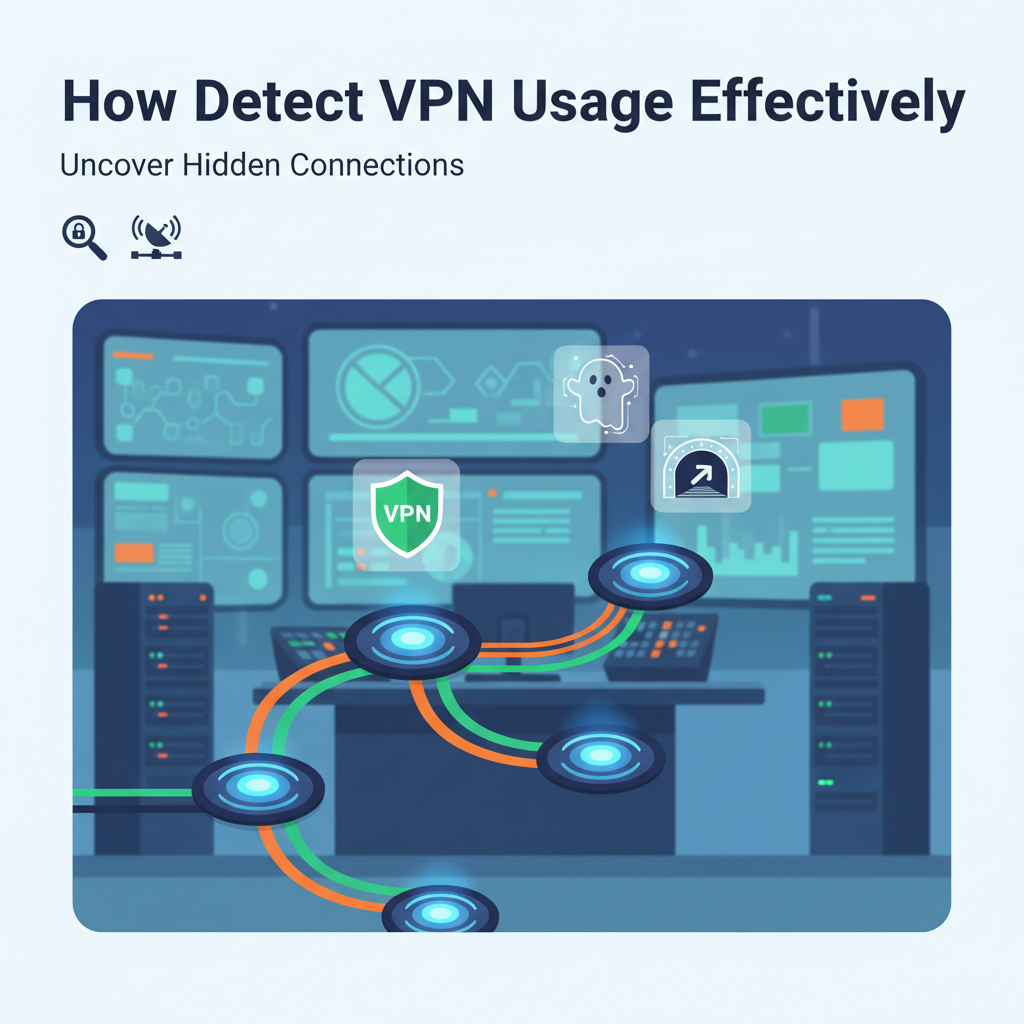
Understanding how to detect VPN usage is increasingly important for organizations, website owners, and cybersecurity professionals seeking to maintain network integrity. This article explores the primary methods and technologies used to identify VPN traffic, the challenges posed by advanced VPN tools, and practical strategies for improving detection, ensuring a thorough and up-to-date guide for decision-makers and technical readers alike.
Techniques and Challenges in Detecting VPN Traffic
VPNs operate by creating an encrypted “tunnel” between the user and an endpoint server, effectively masking the user’s true location and encrypting data in transit. To detect VPN usage, organizations rely on a series of layered techniques aimed at uncovering patterns that indicate the presence of a VPN, even when traditional indicators are obfuscated.
One foundational method involves the use of blocklists and IP address databases. VPN providers commonly lease large blocks of IP addresses for their servers, which, over time, become cataloged in various threat intelligence and IP reputation databases. By cross-referencing user connections against these lists, it is possible to identify potential VPN traffic. However, VPN services frequently rotate or acquire new IP ranges, which demands constant updating of these blocklists to maintain accuracy.
Traffic pattern analysis provides another approach, focusing on the behavior of the network connection rather than its source. VPN-encrypted traffic often displays hallmarks such as consistent packet size, persistent connections, and unusual timing characteristics. Sophisticated monitoring tools can flag these behaviors, although false positives remain a challenge—certain legitimate applications can mimic VPN-like traffic.
Deep packet inspection (DPI) takes a more granular approach, examining packet headers and payloads for protocol signatures typical of VPN technologies like OpenVPN, WireGuard, or IPsec. While DPI can be exceptionally effective against standard configurations, many VPNs now offer obfuscation features that disguise these protocols or encapsulate VPN connections within commonly used protocols such as HTTPS, making DPI less decisive.
Recently, machine learning algorithms have been leveraged to detect subtle behavioral patterns that distinguish VPN users from non-VPN users, even when protocols are obfuscated. These models can analyze a broad set of features—including traffic entropy, handshake patterns, and session longevity—to infer VPN activity. Nonetheless, encrypted and stealth VPNs, as well as custom or self-hosted VPNs, may evade even advanced algorithms.
Privacy and ethical considerations must not be overlooked, as aggressive detection techniques like DPI can infringe upon user privacy and potentially violate regulatory protections. Organizations seeking to identify VPN use must weigh these concerns against their security needs, implementing transparent policies and restricting invasive measures to justified scenarios only. A best-practice approach entails combining multiple methods—blocklists, behavioral analytics, and contextual machine learning—alongside clear ethical guidelines to ensure robust yet responsible VPN detection.
Conclusions
Detecting VPN usage involves a mix of technical methods, including IP address analysis, deep packet inspection, and ongoing database updates. As VPN technologies continue to evolve, so too must detection strategies. Balancing network security and user privacy is essential, and ongoing vigilance is needed to respond to new VPN evasion techniques effectively.