
 Русский
 Bahasa Indonesia
 فارسی
فارسی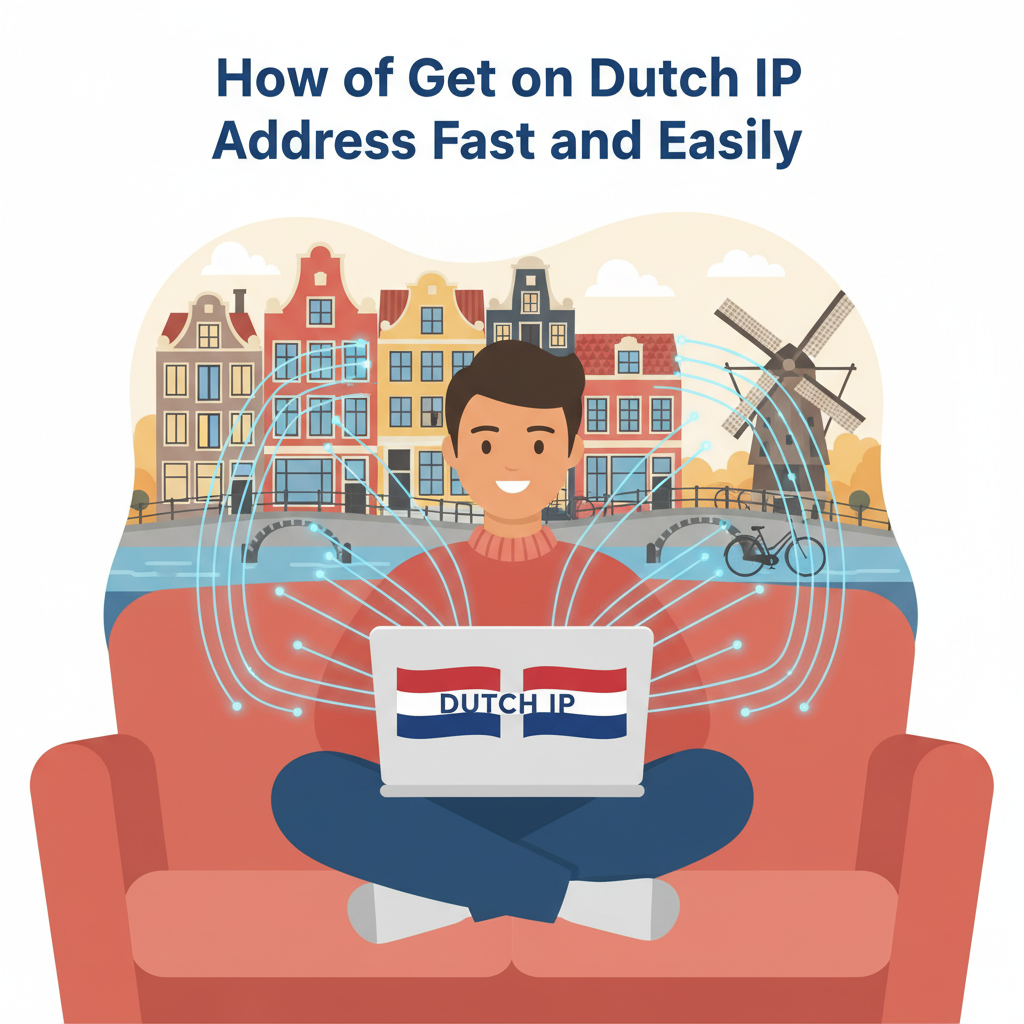
Accessing websites and online services restricted to the Netherlands can be challenging if you’re abroad. Whether you need to stream Dutch TV, access banking, or maintain privacy, getting a Dutch IP address is essential. This article explores the best methods to obtain a Dutch IP, ensuring a smooth, secure online experience regardless of your location.
Methods to Obtain a Dutch IP Address
To obtain a Dutch IP address, there are three primary methods: VPN services, proxy servers, and the Tor network. Each offers different balances of speed, security, and practicality, especially for tasks like streaming Dutch TV, accessing Dutch banking, or protecting your privacy.
A VPN (Virtual Private Network) is the most robust way to get a Dutch IP address. VPNs work by creating an encrypted tunnel to a server in the Netherlands, masking your real IP and replacing it with a Dutch one. This method is highly reliable, offering consistent speed and strong encryption to safeguard your data from hackers, ISPs, or prying eyes. Reputable VPN providers maintain fast servers in the Netherlands, making them ideal for streaming geo-restricted content without buffering. Banking platforms usually accept connections from major VPNs, minimizing access issues. Above all, reputable VPNs do not keep logs and are legal to use in most countries, though always check local regulations. For setup, simply subscribe to a trusted service, install their app, and connect to a Dutch server. For further reading, visit the Wikipedia VPN page.
Proxy servers also let you route your traffic via a Dutch server, assigning you a Dutch IP address. While they are simple to use—just input the proxy address in your app or browser—they often lack encryption. This makes them significantly less secure than VPNs. Free proxies can be unreliable, slow, and easily blocked by Dutch streaming services and banks. Premium proxies add slight security, but rarely match VPN performance. More on proxies can be found on Wikipedia’s proxy server page.
Finally, the Tor network anonymizes your online activity by routing traffic through multiple global nodes, with the option of exiting via a node in the Netherlands. While great for privacy, Tor is generally very slow, making it unsuitable for streaming or online banking. It may occasionally succeed in providing a Dutch IP, but the user has limited control over exit nodes and may face constant CAPTCHA challenges.
For most users seeking a fast, secure, and stable Dutch IP—particularly for streaming, banking, or reliable day-to-day browsing—a reputable VPN is the best solution. Always use strong passwords, enable kill switches if available, and never conduct sensitive transactions over untrusted proxies or public Tor exits.
Conclusions
Obtaining a Dutch IP address is straightforward with the right approach. Using a reliable VPN is the most efficient and secure method for accessing Dutch content and protecting your privacy from anywhere. With these tools, you can enjoy local services, bypass restrictions, and browse safely—giving you the freedom to connect to the Netherlands online whenever you need.