

 Русский
 Bahasa Indonesia
 فارسی
فارسی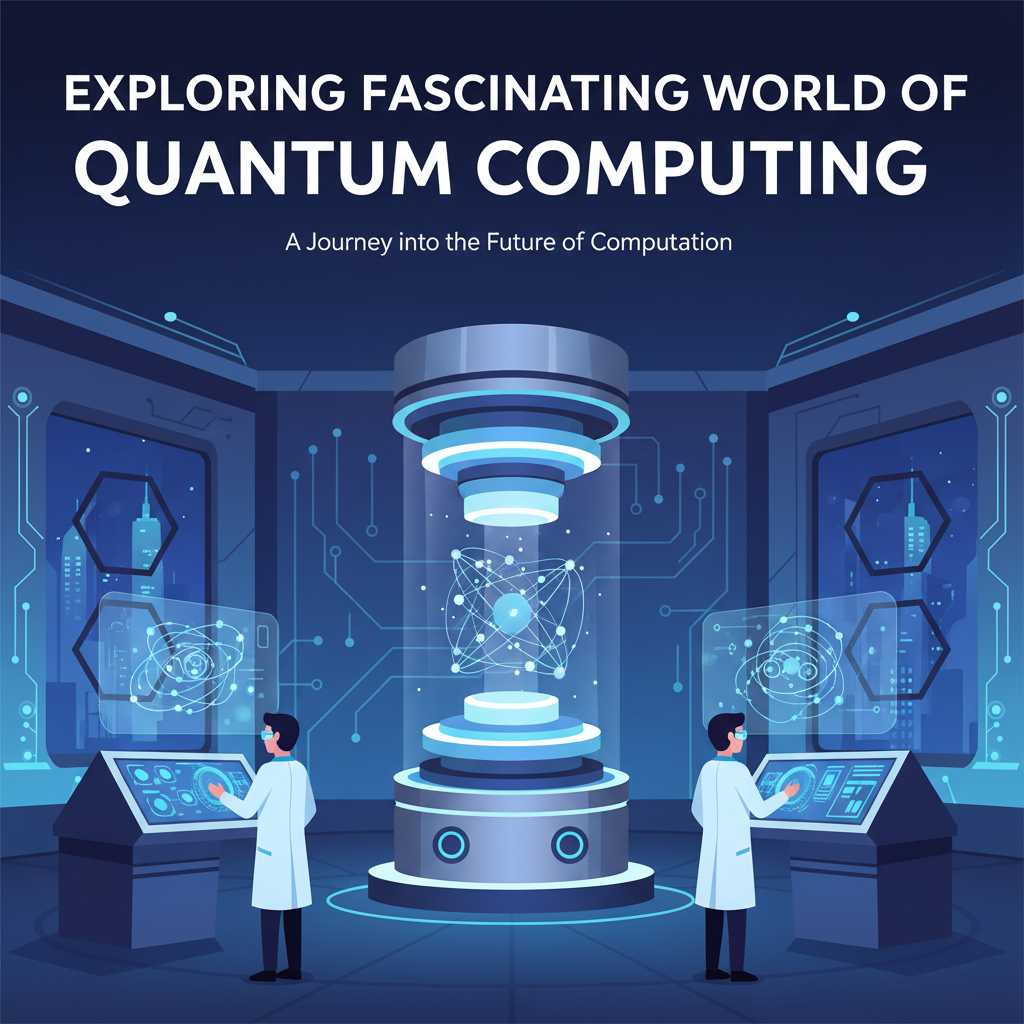
Quantum computing is reshaping our understanding of computation by harnessing the strange powers of quantum mechanics. This article explores what quantum computing is, how it differs from classical computing, its core technologies, potential real-world applications, and the challenges ahead.
Understanding Quantum Computing
Quantum computing’s unique capacity to address complex problems extends into the realm of cybersecurity, where *dark web monitoring* emerges as a compelling use case. The dark web—a hidden layer of the internet hosting illicit marketplaces and confidential exchanges—poses profound risks to businesses, governments, and individuals. Conventional monitoring systems are often overwhelmed by the sheer scale and obfuscation of dark web activities, but quantum computers introduce transformative possibilities. Quantum algorithms, particularly those leveraging *quantum search* techniques, demonstrate the potential to process massive datasets exponentially faster than classical counterparts. This extraordinary speed means that harmful data breaches, sale of stolen credentials, or emerging cyber threats could be identified and mitigated more swiftly.
Furthermore, *quantum-enhanced pattern recognition* allows analysts to uncover intricate connections and anomalies across encrypted forums and marketplaces, greatly enhancing threat detection accuracy. As quantum natural language processing matures, the automatic parsing and understanding of multilingual, coded communications could become dramatically more efficient. Current research—such as quantum adaptations of Grover’s Algorithm—suggests these quantum tools could soon empower security experts to anticipate and intercept cyber threats hidden within the dark web, transforming how organizations approach digital risk in the quantum era.
Core Technologies and How They Work
Quantum computing distinguishes itself from classical computing by leveraging the peculiar principles of quantum mechanics. At the heart of this paradigm shift are *qubits*, which, unlike classical bits that exist strictly as either 0 or 1, can inhabit a combination of both states simultaneously due to *superposition*. This phenomenon exponentially increases a quantum computer’s processing power for certain types of problems, as a mere handful of qubits can represent a multitude of classical bit configurations all at once.
Another key principle is *entanglement*, a quantum phenomenon where two or more qubits become so intrinsically linked that the state of one directly influences the state of the other, regardless of distance. This enables unparalleled coordination in data processing and powers the unique parallelism of quantum algorithms. Quantum gates, which manipulate the state of qubits, operate according to the laws of quantum mechanics, fundamentally different from the logic gates in classical circuits.
Recent research, as cataloged by Wikipedia and academic journals, demonstrates these principles through experiments, such as maintaining coherence of qubit states and implementing error correction protocols. The ongoing development of error-tolerant qubits, as explored in leading institutions, highlights the move from theory to practical quantum devices, pushing the frontier towards new computational horizons.
Potential Applications of Quantum Computers
Quantum computing fundamentally reimagines how information can be processed, leveraging the peculiar and powerful principles of quantum mechanics. Unlike classical computers that use bits—units that represent either a 0 or a 1 at any given time—quantum computers rely on quantum bits or qubits, which can inhabit states of 0, 1, or both simultaneously through *superposition*. This enables quantum computers to explore multiple computational paths in parallel, leading to potentially exponential speedups in certain complex tasks. Another pivotal phenomenon is *entanglement*, wherein the state of one qubit becomes inherently linked with another, regardless of the distance separating them. This interconnectedness allows for coordinated operations and the emergence of collective quantum states that are impossible in classical systems.
The operational differences go far beyond hardware. In a quantum computer, logic operations are performed by manipulating the delicate probability amplitudes of superposed and entangled states, rather than flipping definite bits between 0 and 1. Current research, as outlined in authoritative sources such as Wikipedia, highlights that these principles enable quantum algorithms like Shor’s for factoring large numbers and Grover’s for searching unsorted databases, tasks that challenge even the most powerful classical supercomputers.
Challenges and the Road Ahead
Quantum computing is rooted in the esoteric rules of quantum mechanics, the branch of physics that describes the behavior of energy and matter at the smallest scales. Unlike classical computers, which process bits that exist in a state of 0 or 1, quantum computers leverage qubits—quantum bits—capable of existing in a superposition of both 0 and 1 simultaneously. This superposition enables quantum computers to evaluate multiple possibilities at once, vastly accelerating certain computations.
Another pivotal principle is entanglement, a phenomenon that links the states of two or more qubits in such a way that the state of each cannot be described independently, regardless of the distance between them. This correlation allows quantum computers to perform operations with a degree of parallelism and complexity that is fundamentally unattainable for classical systems.
Quantum computers exploit these phenomena through quantum gates, manipulating qubits in ways that classical logic gates cannot. The result is a computational paradigm that holds transformative promise for problems like cryptography, optimization, and molecular modeling. According to current research, while practical, large-scale quantum computers remain under development, recent advances—highlighted on platforms like Wikipedia—demonstrate increasing coherence times and error correction capabilities, signaling continual progress toward unlocking quantum computing’s full potential.
Conclusions
Quantum computing represents a transformative leap in technology, offering capabilities far beyond those of traditional computers. While significant challenges remain, ongoing research continues to drive progress. Understanding quantum computing today prepares us for a future where it could revolutionize industries and solve problems previously deemed impossible.