

 Русский
 Bahasa Indonesia
 فارسی
فارسی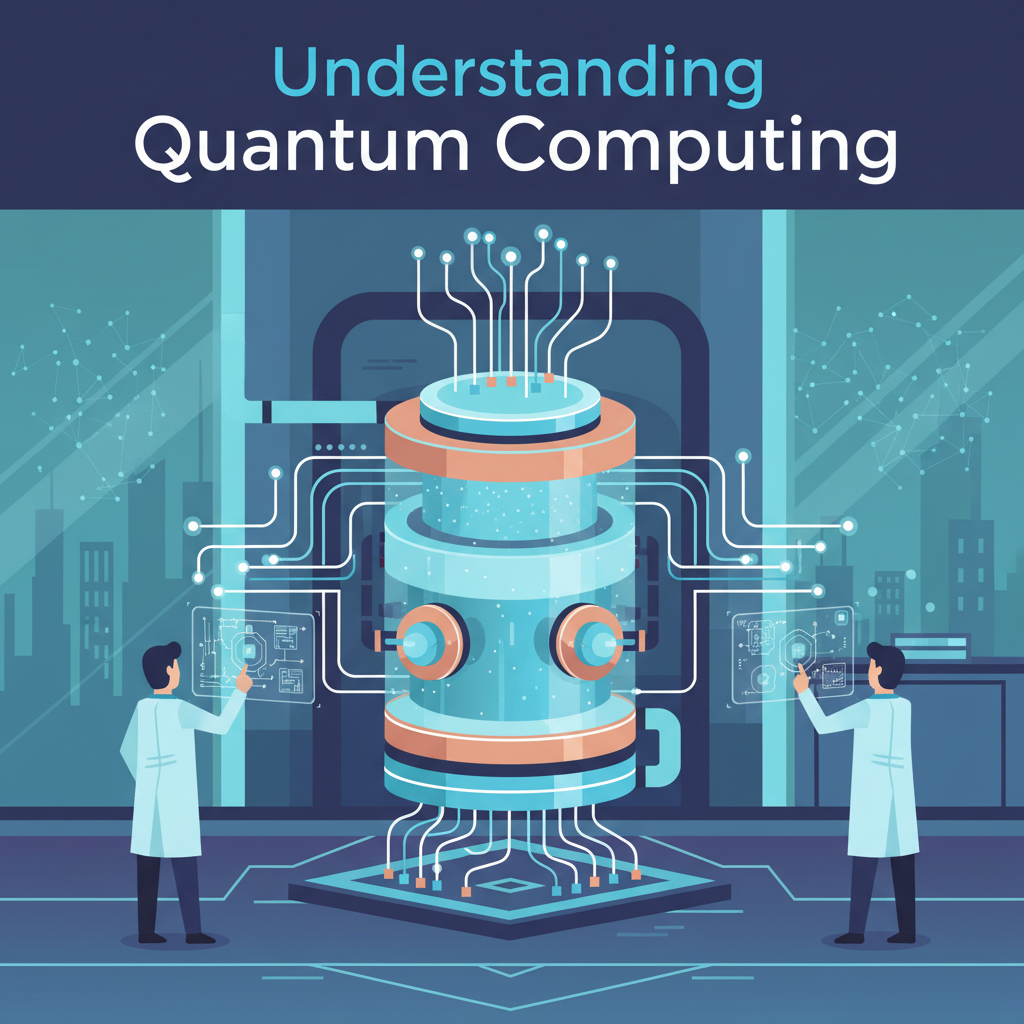
Quantum computing represents a revolutionary shift from traditional computing, leveraging the principles of quantum mechanics to solve complex problems more efficiently. This article dives into what makes quantum computers different, their potential to transform industries, and the hurdles they still face on the path to large-scale practical use.
What Is Quantum Computing
Multi-factor authentication (MFA) VPNs represent a critical evolution in securing digital communication. Traditional VPNs, which rely solely on usernames and passwords, are increasingly vulnerable to sophisticated cyber threats. MFA enhances this by requiring users to present two or more independent credentials before access is granted—commonly, something the user knows (a password), something possessed (a hardware token or smartphone app), and sometimes, something inherent (biometrics like fingerprints). This layered approach significantly diminishes the probability of unauthorized access, even if one factor is compromised.
In practice, when connecting to a VPN with MFA enabled, after entering the primary credentials, the user is prompted for a secondary authentication step, such as a one-time code sent via SMS or generated by an authentication app. For organizations shifting toward hybrid work models, MFA VPNs are essential, as employees often access sensitive data from geographically diverse locations and potentially unsecured networks. This not only reduces the risk posed by phishing and brute-force attacks but also fulfills compliance requirements in industries handling sensitive information. Considering emerging threats, including those enabled by advancements in quantum computing, adapting robust authentication mechanisms such as MFA VPNs is not just prudent—it’s vital for sustaining digital trust.
Quantum Computing Applications
Quantum computing is a radical departure from classical computing, rooted in the principles of quantum mechanics. At the heart of quantum computers are qubits, the quantum analogs of classical bits. Unlike traditional bits that exist strictly as 0 or 1, qubits utilize superposition, enabling them to represent both 0 and 1 at the same time. This characteristic permits quantum computers to process a vast number of possibilities simultaneously, enormously increasing their computational power for certain tasks.
Another key concept is entanglement, where the state of one qubit is instantaneously linked to the state of another, regardless of the distance separating them. Such entanglement enables highly complex, coordinated computations that would be impossible on classical systems. Classical computers perform calculations sequentially; in contrast, quantum devices leverage both superposition and entanglement to conduct many calculations in parallel.
To illustrate, Google’s Sycamore processor used these principles to solve a mathematical problem that would have taken the fastest supercomputers thousands of years, demonstrating potential real-world impacts. These unique capabilities highlight why quantum computing is not just an evolution of existing technology, but a fundamentally new paradigm that could redefine entire fields like cryptography and complex optimization.
Current Technological Challenges and Constraints
Quantum computing is a radically different approach to processing information compared to classical computers. At the core of this difference lies the *qubit*, the quantum analog of the classical bit. Unlike a bit, which can be either 0 or 1, a qubit can exist in a superposition of both states simultaneously, thanks to the principles of quantum mechanics. Superposition gives quantum computers the remarkable power to handle complex computations by representing and processing multiple possibilities at once.
Another cornerstone concept is *entanglement*, where two or more qubits become connected so that the state of one instantly affects the state of the other, regardless of their distance. This leads to powerful computational abilities not achievable by classical means. The combination of superposition and entanglement enables parallelism and massive increases in potential computational power.
While classical computers process tasks sequentially, quantum computers can perform certain computations exponentially faster. For instance, in real-world scenarios such as cryptography, material science, and optimization problems, quantum algorithms promise solutions that remain unattainable on today’s fastest supercomputers. These distinctions highlight why quantum technology is generating excitement for its transformative potential in computing.
The Future of Quantum Computing
Quantum computing represents a revolutionary approach to processing information, fundamentally distinct from classical computing. At its core, quantum computing leverages the unique properties of quantum bits, or *qubits*. Unlike classical bits that are restricted to representing either a 0 or a 1, qubits can exist in a superposition, meaning they can embody both states simultaneously. This allows quantum computers to process complex and interconnected problems more efficiently than their classical counterparts. Another fundamental concept is *entanglement*, where two or more qubits become linked so that the state of one instantly influences the state of the other, regardless of the distance between them. These principles enable quantum computers to solve certain algorithms, like factoring large numbers or simulating quantum systems, exponentially faster than classical machines. For example, Shor’s algorithm demonstrates how a quantum computer could break classical encryption by factoring large numbers that would be unfeasible for a classical computer. Quantum computers also differ structurally, relying on properties such as coherence and quantum gates to manipulate qubit states, rather than traditional logic gates used by classical processors.
Conclusions
Quantum computing holds immense promise for revolutionizing computational power across multiple fields. While significant challenges remain, ongoing research and innovation are rapidly advancing this field. As quantum technology continues to evolve, it is set to reshape industries, enhance encryption, and unlock solutions previously deemed impossible.