

 Русский
 Bahasa Indonesia
 فارسی
فارسی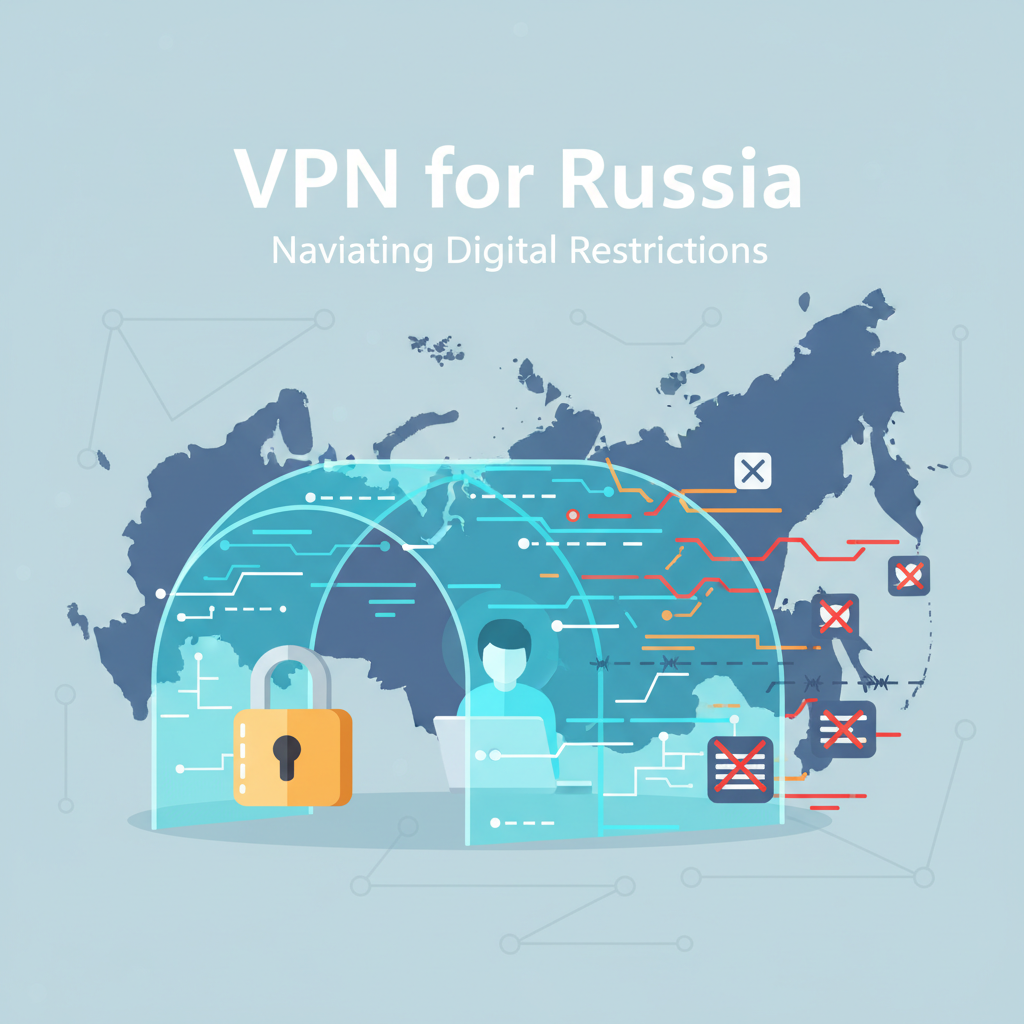
In an increasingly interconnected world, internet freedom and privacy are paramount. For users within Russia, navigating the digital landscape can present unique challenges due to evolving internet regulations. This article delves into how Virtual Private Networks (VPNs) function as a critical tool for maintaining online privacy, accessing a free internet, and securing digital communications in Russia. We will explore their importance, functionality, and the aspects to consider when choosing a reliable VPN service.
The Evolving Landscape of Internet Freedom in Russia
The digital landscape of Russia has undergone a profound transformation over the past two decades, shifting from a relatively open internet environment to one characterized by increasing state control and extensive restrictions. Understanding this evolving landscape is crucial for anyone seeking to navigate the Russian web, and it fundamentally underpins the necessity of tools like VPNs. The story of internet freedom in Russia is one of gradual erosion, driven by a series of legislative acts and governmental actions designed to assert greater national sovereignty over the information space, often under the guise of national security, protecting minors, or combating extremism.
The early years of the Russian internet were marked by a period of relative openness and rapid growth. The internet was seen as a force for modernization and economic development, with little direct government intervention. However, this began to change in the early 2010s, as the Russian government started to view the internet, particularly social media platforms, as a potential source of dissent and foreign influence, especially following the “color revolutions” in neighboring countries and significant opposition protests within Russia itself. This shift in perception paved the way for a series of increasingly restrictive laws.
One of the foundational pieces of legislation that significantly altered the Russian internet landscape is Federal Law No. 139-FZ, enacted in 2012. Often referred to simply as the “blacklist law,” this legislation established the legal framework for blocking websites deemed to contain illegal content. Initially, this included categories such as child pornography, drug-related materials, and calls for suicide. However, the scope of “illegal content” has steadily expanded over time, becoming more broadly interpreted and applied to a wider range of political and social discourse. The law empowered the Federal Service for Supervision of Communications, Information Technology and Mass Media, commonly known as Roskomnadzor, to create and maintain a unified register of domain names, URLs, and network addresses containing information prohibited in Russia. Internet service providers (ISPs) are then legally obligated to block access to these listed resources. The mechanism for adding websites to this blacklist has often been criticized for its lack of transparency and due process, with many sites being blocked based on vague justifications or without proper notification to their owners.
Following the blacklist law, the Russian government introduced Federal Law No. 398-FZ in 2013, which granted Roskomnadzor the power to block websites without a court order for content deemed to be extremisto. This law was initially targeted at content inciting riots or calls for mass unauthorized public events but has been increasingly used to censor critical political content and independent media. The definition of “extremism” in Russia is notoriously broad and has been applied to a wide array of expressions, from nationalist slogans to criticism of government policies, leading to a chilling effect on online speech.
Perhaps one of the most impactful pieces of legislation is Federal Law No. 242-FZ, enacted in 2014, which mandates that all personal data of Russian citizens must be stored on servers located within Russia. This “data localization” law has significant implications for international tech companies and online services operating in Russia. Its stated purpose is to protect the personal data of Russian citizens, but critics argue that it primarily serves to enhance the government’s surveillance capabilities by making it easier to access user data without going through international legal channels. Many international companies have faced fines or even bans for non-compliance, leading some to withdraw from the Russian market or significantly modify their operations.
The “Yarovaya Laws,” a package of amendments to anti-terrorism legislation passed in 2016, further tightened the screws on internet freedom. These laws require telecommunications companies and internet service providers to store all user communications, including phone calls, text messages, and internet traffic (up to six months for content and three years for metadata), and to provide this data, as well as decryption keys, to security agencies upon request. This legislation represents a massive expansion of state surveillance capabilities, enabling comprehensive monitoring of citizens’ online and offline activities. The sheer volume of data storage required has placed a significant burden on service providers and raised serious concerns about privacy and the potential for abuse.
Complementing these legislative efforts, the Russian government has also pursued a strategy of exerting greater control over internet infrastructure. This culminates in the controversial “Sovereign Internet Law” (Federal Law No. 90-FZ), enacted in 2019. This law aims to create a “runet” – a self-contained Russian internet capable of operating independently of the global internet’s infrastructure in the event of external threats or cyberattacks. The law mandates the installation of deep packet inspection (DPI) equipment on ISP networks, which allows for traffic filtering, redirection, and the blocking of specific services or protocols. While officially presented as a measure for national cybersecurity, critics widely view this law as a step towards greater censorship and the potential for a nationwide internet shutdown, similar to China’s “Great Firewall.” The DPI equipment allows Roskomnadzor to identify and block traffic using VPN protocols, posing a direct threat to the use of these tools.
The implications of these regulations for internet users in Russia are far-reaching and impact nearly every aspect of online life. Censorship is rampant, with independent news outlets, human rights organizations, opposition political websites, and even social media pages critical of the government regularly being blocked. For instance, after the 2022 invasion of Ukraine, virtually all major independent Russian media outlets were blocked, forcing many journalists into exile or to operate from abroad using VPNs. International social media platforms like Facebook and Instagram were also banned, labeled as “extremist organizations.” Similarly, platforms like X (formerly Twitter) have faced severe throttling, making them practically unusable without a VPN. Even Wikipedia has faced threats of blocking for its coverage of the war deemed “false information” by Russian authorities.
Surveillance is another pervasive concern. With the Yarovaya Laws and the Sovereign Internet Law, the Russian government possesses extensive capabilities to monitor online communications. This creates a chilling effect, as users become hesitant to express dissenting opinions or engage in discussions that could be interpreted as “extremist” or “undesirable.” Fear of reprisal, whether through administrative fines, arrest, or even criminal charges, discourages open online discourse and promotes self-censorship.
Furthermore, these regulations lead to significant access restrictions to international content and services. Beyond the blocking of specific social media platforms, the broader strategy of internet isolation hinders access to a wide range of global information, entertainment, and business services. Many international websites and applications, even those not directly targeted by censorship, may experience degraded performance or encounter difficulties operating within the Russian internet infrastructure due to data localization requirements or the technical complexities of operating under such restrictive conditions. For example, many users report difficulties accessing international streaming services, online gaming platforms, and even scientific databases without the aid of circumvention tools.
Specific examples of blocked websites and services are numerous and constantly evolving. As mentioned, Facebook and Instagram are officially banned. On the other hand, Google products, while not entirely banned, have experienced disruptions and individual services like Google News have been blocked. LinkedIn has been blocked since 2016 for non-compliance with data localization laws. Numerous independent news websites, such as Meduza, Novaya Gazeta, and Dozhd TV, have been blocked and labeled as “foreign agents” or “undesirable organizations.” The blocking extends to virtual private network (VPN) services themselves. Since 2017, Russia has sought to ban VPNs and anonymizers that do not comply with government blocking lists, effectively trying to eliminate tools that allow users to circumvent censorship. Additionally, specific anti-war platforms, human rights websites, and even personal blogs expressing critical views have been targeted.
The cumulative effect of these laws and actions is the creation of a heavily controlled and monitored internet environment. Within this context, the need for tools like VPNs becomes not just a matter of convenience but often a necessity for accessing uncensored information, maintaining privacy, and communicating securely. VPNs allow users to bypass geo-restrictions and censorship by encrypting their internet traffic and routing it through servers located in other countries where the same restrictions do not apply. This makes it appear as if the user is browsing from a different location, thus circumventing the blocks imposed by Roskomnadzor and ISPs. Moreover, the encryption offered by VPNs protects user data from being intercepted and monitored by third parties, including government surveillance agencies, which is particularly critical in a country with expansive surveillance laws like Russia. Without VPNs, Russian internet users are increasingly confined to a digital ecosystem heavily curated and controlled by the state, limiting their access to a global exchange of information, ideas, and services.
How VPNs Work to Ensure Privacy and Access in Russia
The digital landscape within Russia has undergone a significant transformation over the past two decades, shifting from a relatively open internet environment to one characterized by increasing state control and extensive regulation. This evolving scenario is not merely a collection of isolated incidents but rather a systematic effort by the Russian government to assert sovereignty over its segment of the internet, often referred to as Runet, and to manage the flow of information accessible to its citizens. Understanding this complex web of policies, laws, and technical implementations is paramount to grasping the necessity and function of tools like Virtual Private Networks (VPNs) for anyone operating within or interacting with the Russian Federation.
The genesis of this regulatory impulse can be traced back to the early 2010s, with a noticeable acceleration following the mass protests of 2011-2012. Up until that point, while some discussions around internet oversight existed, the practical implementation of widespread censorship and surveillance was nascent. The turning point arrived with the adoption of several key legislative acts that progressively armed the state with significant powers to restrict online content and monitor user activity.
One of the most foundational pieces of legislation is the Federal Law No. 139-FZ, signed in 2012, which established a unified register of prohibited websites. Initially targeting child pornography, drug-related content, and incitement to suicide, this law provided the legal framework for the Roskomnadzor, Russia’s federal agency responsible for overseeing media and internet censorship, to begin active blocking of online resources. The scope of this law, however, quickly expanded. Amendments soon allowed for the blocking of content deemed extremist, promoting illegal mass gatherings, or containing false information. This expansion signaled a clear trajectory: the government’s intention to broaden its control beyond universally sensitive topics to encompass political discourse and dissent.
The “Law on Extremism” (Federal Law No. 114-FZ), while not exclusively an internet law, has been instrumental in justifying many online restrictions. Its broad definition of “extremism” has allowed for the targeting of a wide array of content, from political opposition rhetoric to religious minority materials. This legal ambiguity leaves significant room for interpretation and, consequently, potential abuse, leading to the blocking of numerous websites and social media accounts that express critical views of the government or its policies.
The year 2014 saw the introduction of Federal Law No. 242-FZ, commonly known as the “Data Localization Law.” This law mandates that all personal data of Russian citizens must be stored on servers located within Russia. While ostensibly aimed at protecting personal data, critics argue its primary objective is to facilitate easier government access to user information and to isolate Russian internet infrastructure from global networks. This law has created compliance challenges for international tech companies, leading to some, like LinkedIn, being blocked for non-compliance. Others have chosen to localize data, thereby potentially exposing their users’ information to Russian authorities.
Further intensifying the regulatory environment, Federal Law No. 374-FZ, the “Yarovaya Law” (named after its co-author Irina Yarovaya), came into effect in 2016. This controversial package of anti-terrorist legislation imposes stringent data retention requirements on telecommunications companies and internet service providers (ISPs). They are obligated to store all user communications, including phone calls, text messages, and internet traffic, for up to six months, and metadata for three years. This data must be made available to security services upon request without a court order, fundamentally undermining notions of privacy and enabling extensive state surveillance. The sheer volume of data involved and the technical challenges of storing it have placed an immense burden on service providers, with critics highlighting the substantial financial and logistical implications.
The push for internet sovereignty culminated in the “Sovereign Internet Law” (Federal Law No. 90-FZ) enacted in 2019. This law, officially aimed at ensuring the stable and secure functioning of the Russian internet in the event of external threats, grants the government extensive powers to control internet traffic routing within Russia. It mandates the installation of Deep Packet Inspection (DPI) equipment on ISPs’ networks, allowing Roskomnadzor to filter content, block specific services, and even, theoretically, disconnect Russia from the global internet. This technical infrastructure not only facilitates censorship but also enables a more granular level of surveillance, allowing authorities to analyze traffic patterns and identify users attempting to circumvent restrictions. The implications of this law are profound: it establishes the technical groundwork for a centralized control system akin to China’s Great Firewall, paving the way for a more isolated and controlled Runet.
The cumulative effect of these laws and technical implementations is a significantly eroded internet freedom for users within Russia. The most immediate and tangible consequence is widespread censorship. Roskomnadzor maintains several registers of prohibited information, encompassing a vast array of websites and online resources. Specific examples of blocked websites and services are numerous and ever-shifting. Major international platforms like Facebook (Meta, labeled as an extremist organization in Russia), Instagram, and X (formerly Twitter) have been blocked or significantly throttled. Independent news outlets, human rights organizations, opposition political platforms, and even cultural websites have frequently found themselves on the blacklist. The blocking extends beyond individual websites to entire domains, IP addresses, and even specific protocols, making access increasingly challenging. For instance, the website of Alexei Navalny’s Anti-Corruption Foundation (also labeled extremist and banned) and its associated resources have been systematically targeted. Media outlets like Meduza, Detector Media, and Radio Free Europe/Radio Liberty have faced similar fates. Even seemingly innocuous content, if vaguely tied to perceived dissent or information conflicting with the official narrative, can fall victim to these restrictions.
Beyond direct blocking, censorship manifests through “slowdowns” or throttling, where services are not entirely blocked but become functionally unusable due to intentionally reduced bandwidth. This tactic was notably employed against Twitter and Google services, making them frustratingly slow for users without a full ban, a method designed to discourage their use without inciting the same level of outrage a complete block might.
Surveillance is another critical implication. The Yarovaya Law, coupled with the data localization requirements, creates an environment where virtually all online activity of Russian citizens can be monitored and potentially accessed by state security services. This extends to encrypted communications, as proposals have emerged to demand backdoors or keys from service providers, or to outright ban end-to-end encrypted services that do not comply. The government’s ability to monitor communications creates a chilling effect, deterring individuals from expressing dissenting opinions or accessing prohibited information, out of fear of reprisal.
Access restrictions to international content and services are also a major concern. The blocking of major social media platforms and news sites isolates Russian users from global discourse and diverse perspectives. This creates an information bubble, where state-controlled media narratives dominate, further shaping public opinion and limiting access to alternative viewpoints. International collaboration, academic research, and cultural exchange are all hampered when access to global platforms and resources is restricted or made difficult.
The implications for individual users are profound. For journalists, activists, researchers, and anyone seeking unbiased information or independent communication, these regulations pose immense challenges. The ability to conduct investigative journalism, organize protests, or simply engage in open discussion is severely curtailed. For ordinary citizens, the restrictions limit access to entertainment, educational resources, and a wider range of opinions and ideas. The digital divide between Russia and the rest of the world is widening, potentially leading to technological and informational isolation.
In this increasingly restricted digital landscape, the need for tools that can circumvent these controls becomes self-evident. This is precisely where VPNs step in. A VPN, by encrypting internet traffic and routing it through a server in another country, effectively masks a user’s IP address and location, making it appear as if they are accessing the internet from elsewhere. This technical capability directly addresses the challenges posed by Russian internet regulations.
Firstly, VPNs provide a means to bypass content blocking. When a user connects to a VPN server outside Russia, their internet traffic is no longer subject to the filters and blocks imposed by Roskomnadzor. This allows access to blocked websites, social media platforms, international news outlets, and other online services that are otherwise inaccessible within Russia. For instance, an individual in Russia wishing to access Facebook could connect to a VPN server in Germany, and Facebook’s servers would see the connection originating from Germany, thus bypassing Russian blocks.
Secondly, VPNs enhance privacy and security by encrypting all data transmitted between the user’s device and the VPN server. This encryption makes it significantly harder for ISPs or government agencies to intercept and analyze user traffic, thereby mitigating the surveillance capabilities enabled by laws like the Yarovaya Law. While not an absolute guarantee against sophisticated state-level surveillance, it adds a substantial layer of protection against routine monitoring and data collection.
Thirdly, VPNs combat the fragmentation of the internet and ensure access to international services. Many online platforms and applications are either blocked or have their functionality curtailed within Russia due to regulatory pressure or non-compliance. A VPN allows users to bypass these geographical restrictions, enabling them to access a global internet experience, participate in international online communities, and utilize services that are unavailable or partially restricted in the Russian Federation.
The Russian government, aware of the role VPNs play in circumventing its controls, has also taken steps to restrict their use. In 2017, Federal Law No. 276-FZ was passed, making it illegal for VPN services and anonymizers to provide access to blocked websites. This law primarily targets VPN providers, instructing them to implement blocking of blacklisted content, and aims to compel mobile carriers and ISPs to block VPNs that do not comply. Roskomnadzor has actively sought to block the IP addresses of major VPN services and has even pressured tech companies like Google to remove VPN applications from their app stores in Russia. These efforts demonstrate the ongoing cat-and-mouse game between government censors and users seeking unrestricted internet access. Despite these attempts to curb their use, VPNs remain a crucial, albeit embattled, tool for navigating the increasingly complex and restricted digital landscape of the Russian Federation.
Conclusions
In conclusion, VPNs are indispensable tools for anyone seeking to maintain digital freedom and privacy within Russia. They offer a robust solution to bypass geographical restrictions, enhance online security, and protect against surveillance. While the landscape of internet regulation continues to evolve, a well-chosen VPN empowers users to navigate these challenges effectively. By understanding their functionality and carefully selecting a reputable provider, individuals can ensure a more open and secure online experience, safeguarding their data and access to information in the digital age.