

 Русский
 Bahasa Indonesia
 فارسی
فارسی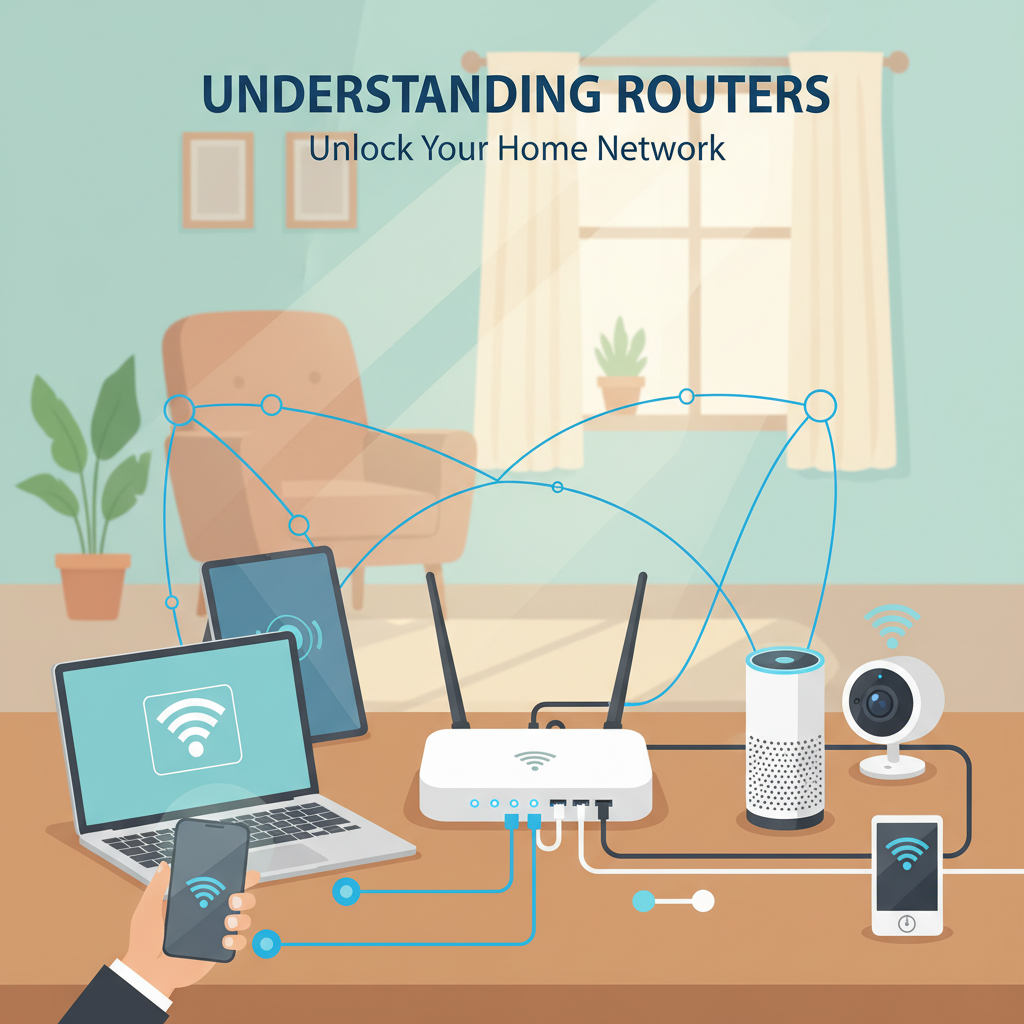
A router is at the heart of almost every modern network, ensuring our devices connect smoothly to the internet and each other. In this article, we’ll explore what a router is, how it works, and why it is an essential part of your home or office network.
How Routers Work and Why They’re Important
A router is a specialized networking device designed to direct and manage traffic across computer networks. Sitting at the heart of most networks, a router operates at the network layer (Layer 3) of the OSI model, where it examines the destination IP address of each data packet and determines the optimal path for that packet to reach its destination. Unlike simpler devices such as switches or hubs, routers connect multiple networks—most commonly, a local area network (LAN) to the broader internet—while managing and filtering the data that flows between them.
There are several types of routers suited for different environments. *Wired routers* rely on physical Ethernet connections and are known for offering stable and fast connections in enterprise setups. *Wireless routers* (often found in households) combine the functionality of a router and a wireless access point, allowing devices to connect via Wi-Fi. More advanced types include *core routers*, which provide high-speed data transmission within the backbone or core of an internet service provider’s network, and *edge routers*, positioned at the boundary of a network to connect with external networks.
Critical features set routers apart. The assignment and management of IP addresses is essential for device identification and communication. Routers often provide Network Address Translation (NAT), which allows multiple devices on a private network to share a single public IP address, increasing both security and address efficiency. Many come with integrated firewalls, helping to block malicious traffic and unauthorized access.
In practical terms, routers play a crucial role in enabling the seamless experience of streaming video, online gaming, and supporting remote work. They prioritize data flow to prevent congestion, shield devices from external threats, and support dozens of simultaneous connections—ensuring our ever-expanding array of smart devices remain reliably connected and protected.
Conclusions
Routers are fundamental devices that enable communication between different networks, directing traffic efficiently and securely. Whether in homes or businesses, understanding how routers work helps users optimize their internet experience and maintain a stable, safe connection. Knowing the role of a router empowers you to make informed decisions about your digital infrastructure.