

 Русский
 Bahasa Indonesia
 فارسی
فارسی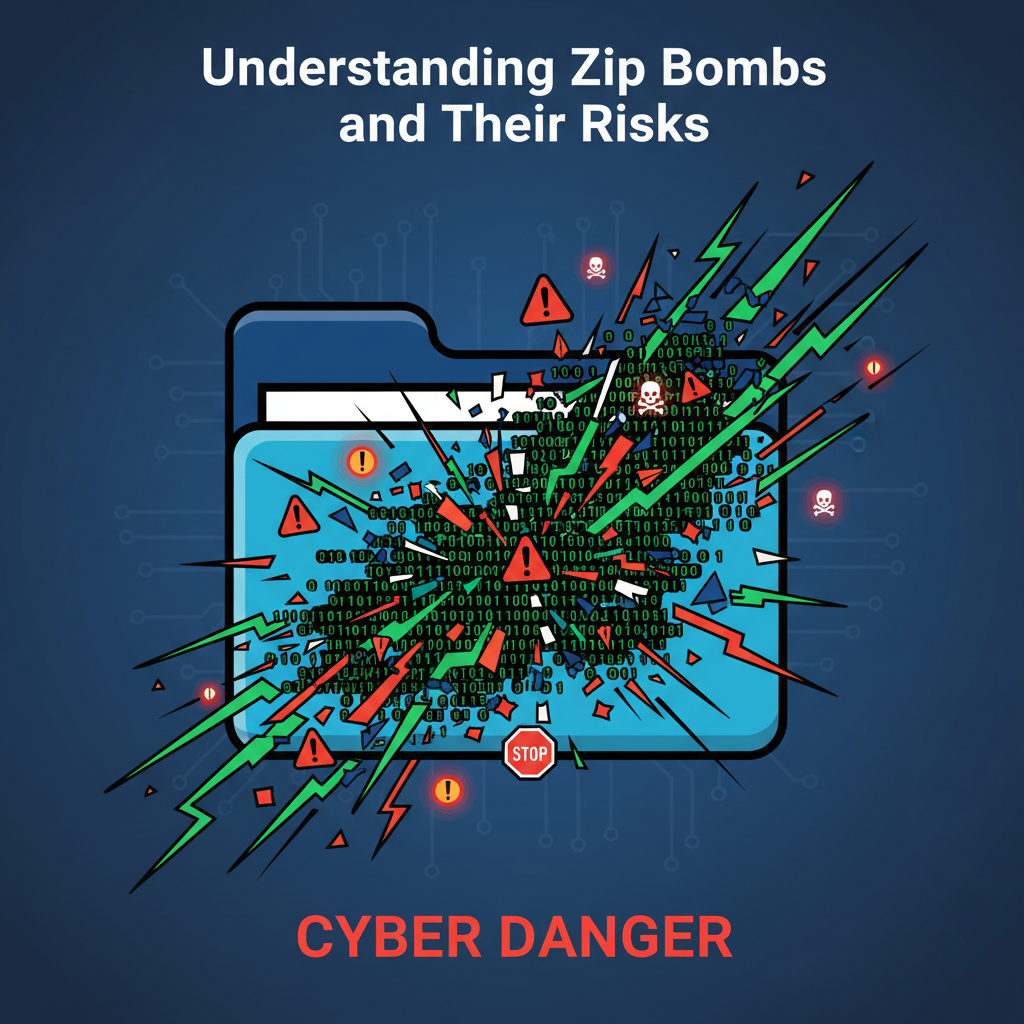
Zip bombs are deceptively simple yet highly destructive digital weapons. In this article, we dive into what zip bombs are, how they work, and why they pose significant security threats to computers and systems worldwide. By understanding zip bombs, you can better protect yourself and your data from potential harm.
How Zip Bombs Work and Their Impact
A zip bomb is a type of malicious archive file that exploits the way computers handle compressed data. At its core, a zip bomb is a deceptively small file that, when extracted, expands to an enormous size, often containing gigabytes or even terabytes of data nested within layers of compressed archives. According to reliable sources like Wikipedia, these files are crafted using recursive compression techniques, where a compressed file contains further compressed files, sometimes recursively down several hundred or thousand levels. This manipulation allows attackers to embed an almost unimaginable amount of data within a tiny archive, sometimes just a few kilobytes in its compressed form.
The historical context of zip bombs traces back to the late 1990s and early 2000s, when security researchers and malicious actors alike began experimenting with ways to disrupt systems that relied on automated file extraction. Zip bombs quickly became notorious due to their effectiveness in triggering denial-of-service (DoS) conditions: when an unsuspecting system—often antivirus software—attempts to scan or decompress the archive, it can consume all available memory or disk space, leading to system instability or crashes. Unlike traditional malware, zip bombs often evade detection simply because they do not directly contain executable code or obvious viruses, making them harder to spot with signature-based security tools.
The risk posed by zip bombs is particularly high for enterprises, whose automated scanners or mail gateways might be overwhelmed, potentially affecting critical business operations. To counteract these risks, modern antivirus and archival software has evolved to implement safeguards such as maximum extraction limits, detection of excessive nesting, and heuristics that recognize suspicious archive structures. Despite these advances, attackers continually experiment with evasion techniques, making it essential to stay updated on best practices for detection and prevention. Such measures include careful configuration of archival tools, regular software updates, and user education to avoid inadvertently triggering these resource-draining attacks.
Conclusions
Zip bombs exploit compression techniques to cripple systems, demonstrating the need for robust cybersecurity awareness. Recognizing and avoiding suspicious files are essential steps in minimizing risk. By understanding how zip bombs function, individuals and organizations can more effectively defend against these unique digital threats.