

 Русский
 Bahasa Indonesia
 فارسی
فارسی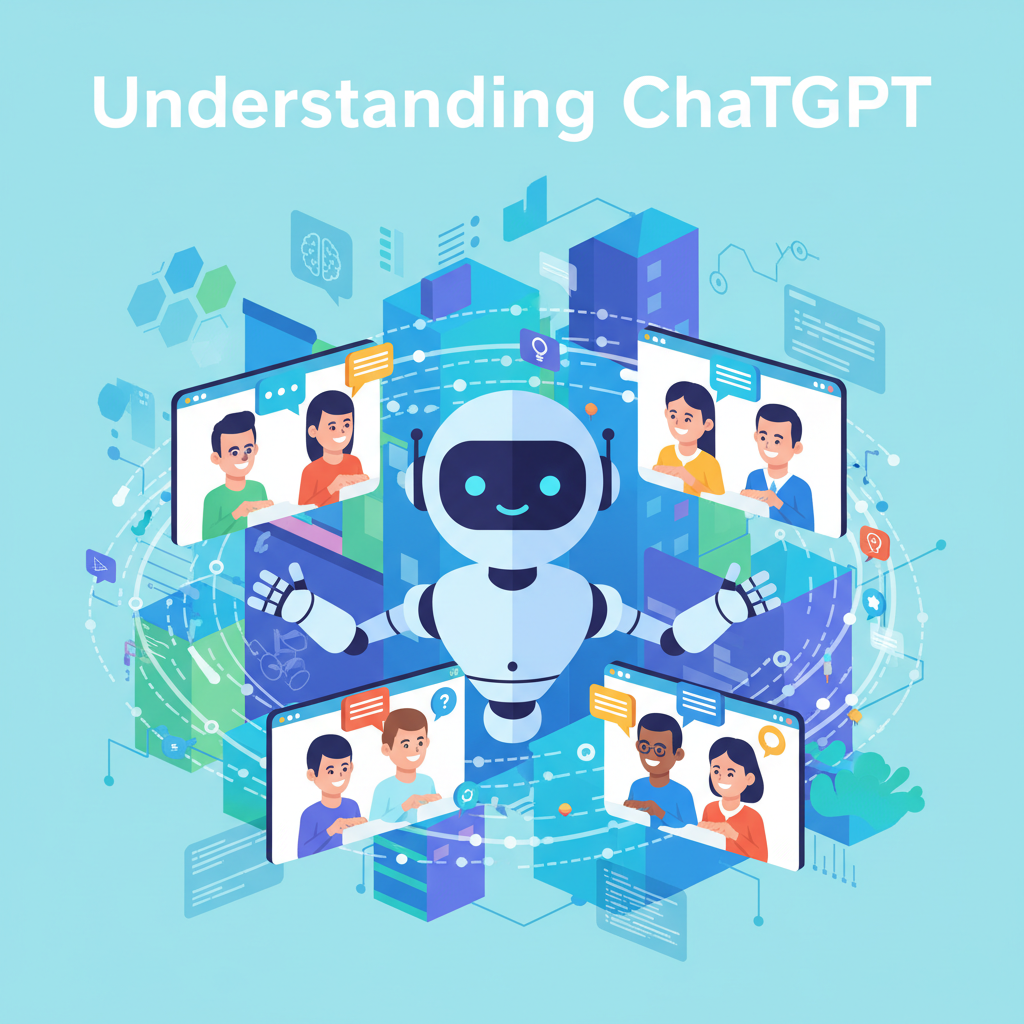
ChatGPT has rapidly gained attention for its ability to generate human-like responses in a variety of contexts. But what exactly is ChatGPT, and how does this AI technology work? In this article, we delve into its development, purposes, and the potential impact it has on digital communication, setting the stage for a clearer understanding of this revolutionary tool.
The Technology Behind ChatGPT
At the core of ChatGPT lies a sophisticated technology shaped by years of research and innovation in artificial intelligence. Developed by OpenAI, ChatGPT is built upon the GPT architecture, which stands for Generative Pre-trained Transformer. This architecture represents a breakthrough in natural language processing, harnessing neural networks that have been pre-trained on vast volumes of textual data from the internet. The system’s strength originates in its transformer design, allowing the model to analyze and generate text by learning the intricate patterns, context, and semantics inherent in human language.
Large language models like ChatGPT operate through a process of unsupervised learning, in which they ingest massive datasets composed of books, articles, websites, and countless interactions. This broad exposure helps the model capture not just the meaning of words, but also their relationships, colloquialisms, and cultural nuances. As a result, ChatGPT is capable of producing responses that feel both informative and natural. The process of fine-tuning, where the model’s responses are refined with additional training on specialized datasets and through human feedback, further enhances its accuracy and relevance.
The versatility of ChatGPT’s technology underpins its rapidly expanding range of applications across diverse domains. Organizations deploy ChatGPT for customer support, enabling instant, round-the-clock assistance. In education, it acts as an accessible tutor, providing explanations and guidance. For personal use, ChatGPT serves as a virtual assistant, managing schedules, drafting emails, or even sparking creativity in writing. However, such far-reaching capabilities necessitate ongoing discussion about ethical considerations—from data privacy to the risks of misuse, including generating misinformation or reinforcing biases present in training data. These concerns are central to current dialogues, especially as the technology continues to advance and integrate into more facets of everyday life, as documented by recent Wikipedia analyses and expert commentary.
Conclusions
ChatGPT represents a significant leap in artificial intelligence, making conversations with machines more natural than ever. By understanding its roots, capabilities, and applications, we see how it is reshaping digital interactions. As AI continues to evolve, ChatGPT is poised to play a key role in many aspects of our online experiences.